One orientation before we go deeper. Almost every debate in this unit — sex ed, pornography, sexting, consent — is really an argument about a single prior question: is adolescent sexuality a deficit to be managed or an asset to be developed? Hold that fork in the road in mind and the rest of the unit organizes itself around it.
The deficit model asks "how do we stop bad things from happening to teens?" The asset model asks "how do we support healthy sexual development?" Both care about the same kids. But they measure success differently — one counts prevented harms, the other counts competencies gained. Watch which frame each policy in this unit is secretly running on.
The developmental mismatch, applied to sex
Unit 5 gave you the brain mechanism; here it earns its keep. Across adolescence the socioemotional/limbic system — reward, arousal, sensitivity to social cues — matures early, driven up by pubertal hormones. The prefrontal control system — impulse regulation, consequence-weighting, future-orientation — matures slowly, well into the twenties. That gap is not a defect. It's a normative, temporary imbalance between an accelerator and a set of brakes that finish installing on different schedules.
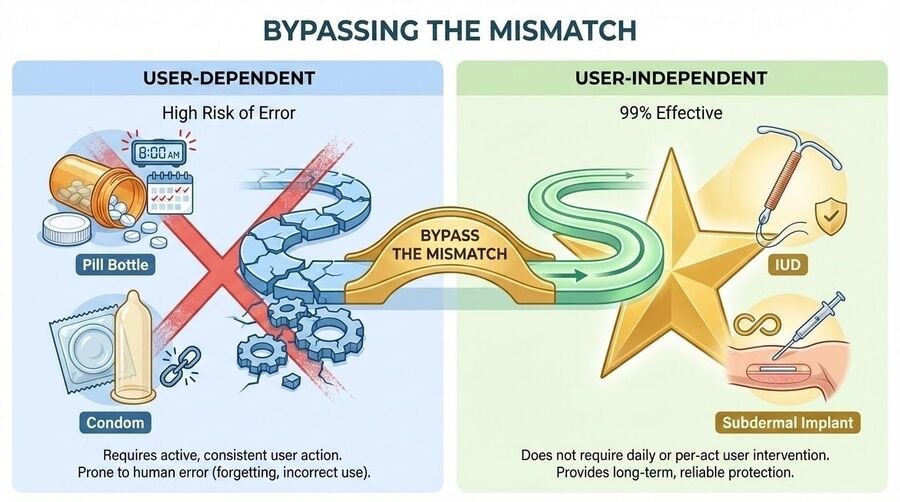
What this does not license is the lazy conclusion "teens can't help themselves." The mismatch shifts probabilities under conditions of arousal and peer presence; it does not abolish agency. The developmentally honest move is to design environments — good information, easy access to protection, cultures of consent — that don't demand flawless prefrontal control in the exact moment it's least available.
"Hot" vs. "cold" cognition is the mechanism that ties it all together. A teenager can recite every fact about STIs and contraception in a calm classroom (cold cognition) and still not deploy any of it in a parked car (hot cognition). Sexual decisions are made in hot states — high arousal, high social salience — which is precisely where the immature control system is most outmatched. This is why knowledge-only interventions underperform: they train the cold system for a hot-state problem. Skills, scripts, and easy access to protection travel into hot states in a way that facts alone don't.
Identity: the monosexual → plurisexual shift
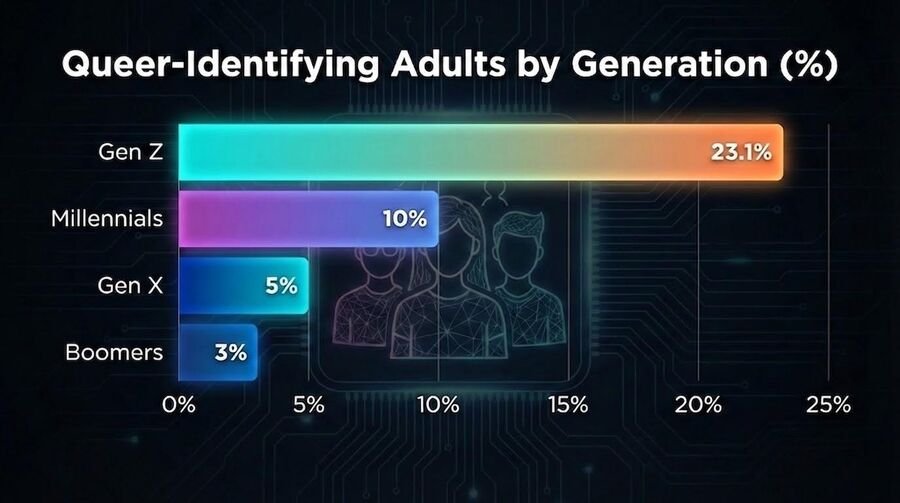

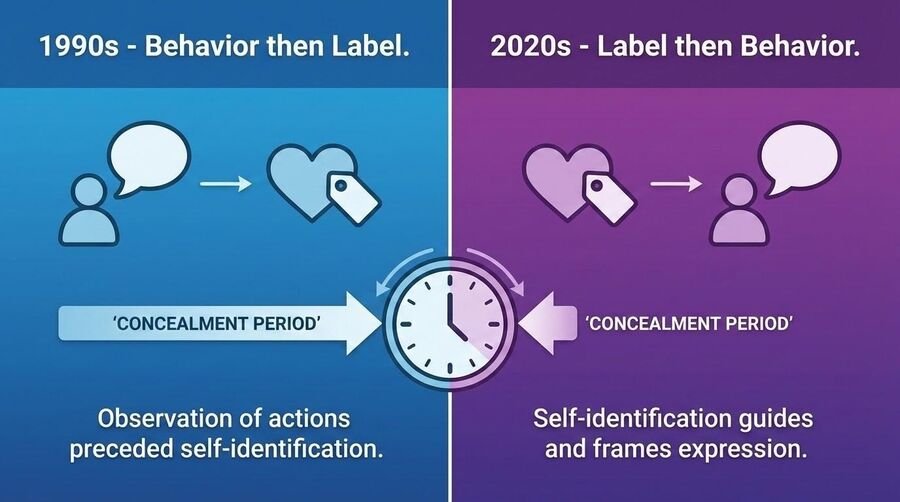
The most striking generational change in sexuality is not about behavior — it's about identity language. Younger cohorts are far more likely to name a sexual identity at all, and when they do, they increasingly reach past the gay/straight binary toward plurisexual labels — bisexual, pansexual, queer. In 2024 Gallup polling, roughly 23% of Gen Z adults identified as LGBTQ+, with bisexual the single most common category. Read that carefully: it is largely a rise in plurisexual identification, a move away from monosexuality (attraction to one sex) toward plurisexuality (attraction to more than one).
Is this "more people being LGBTQ+" or "more people feeling free to say so"? The honest answer is that measured identity reflects both underlying attraction and the cultural room to name it — and current data can't cleanly separate the two. The safe, defensible claim: identity disclosure has expanded, and the vocabulary of identity has diversified.
Fluidity (Diamond) is situation- and time-dependent flexibility in attraction — the capacity for attraction to shift with relationships, context, or life stage. Bisexuality is an identity describing attraction to more than one sex. A person can be fluid without identifying as bisexual, and vice versa. Fluidity appears across orientations and is somewhat more documented in women, though it is not exclusive to them.
The three can dissociate. Someone may experience same-sex attraction, have only other-sex partners, and identify as straight — all at once. Surveys that collapse these into one number lose the picture. Careful research measures all three separately, which is why prevalence estimates vary so much depending on which dimension is asked about.
Milk-carton "coming out" as a single dramatic disclosure is giving way, for many youth, to a more incremental, lower-stakes process — partly because peer norms shifted fast. But "lighter on average" hides wide variance: for youth in unsupportive families or regions, the stakes remain high, which is where the minority-stress story from Unit 6 re-enters.
Unit 6 handed you minority stress; this unit spends it. The rise in LGBTQ+ identification is not, by itself, a mental-health story — but YRBS data show LGBTQ+ youth reporting much higher rates of depression and suicidality than their peers. That gap is best read as the cost of stigma, not a feature of the identity. Same person, two units: the mechanism travels.
Interactive · The two curves
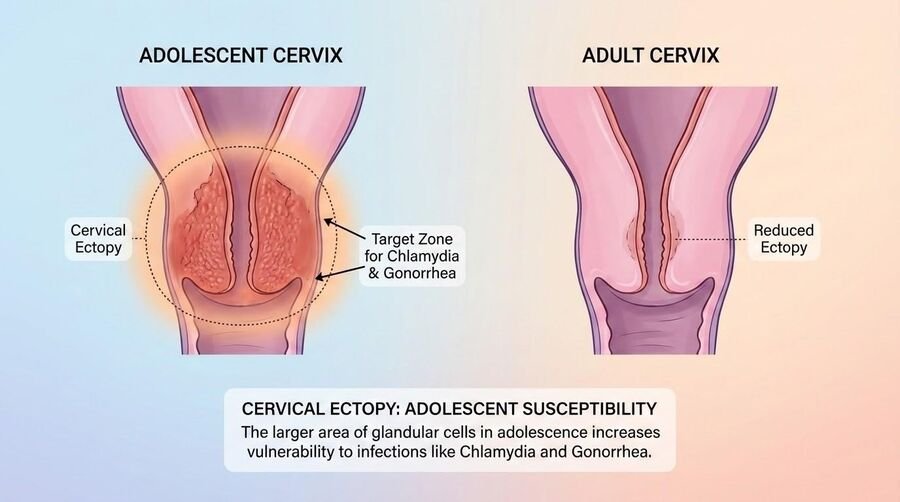
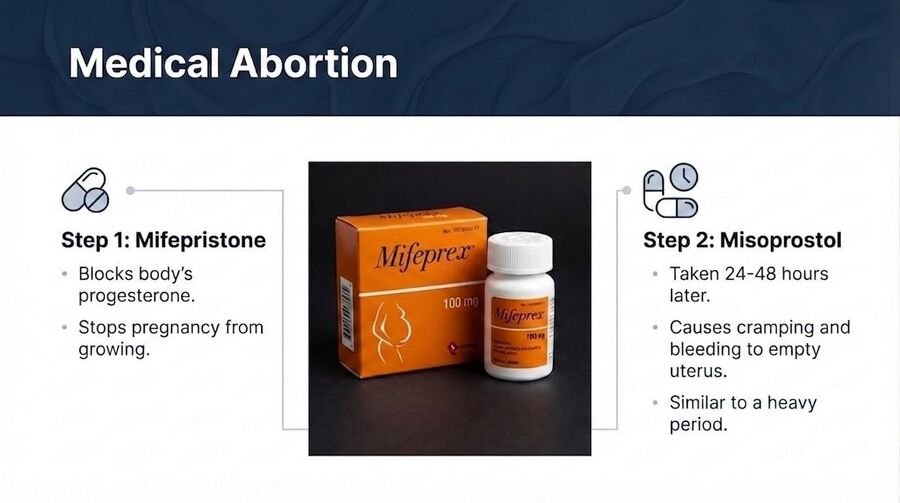
Pregnancy and infection are decoupled problems
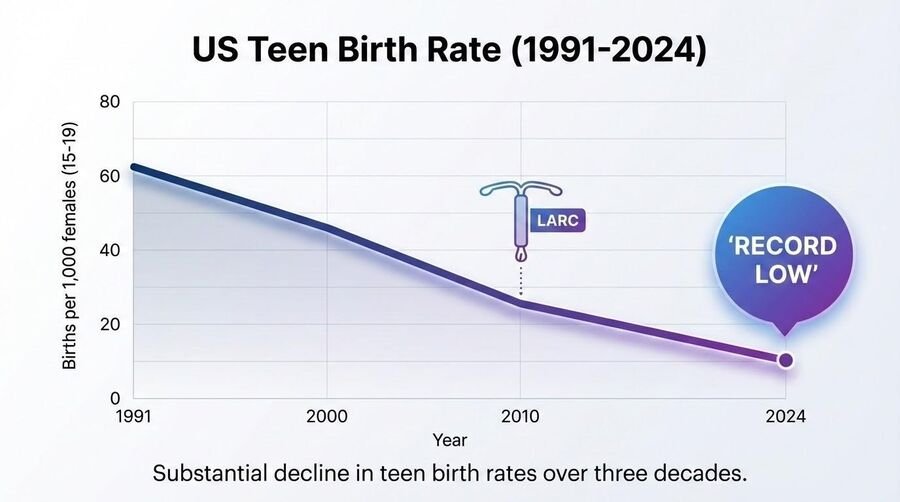
Here is the single most common data-literacy trap in this unit: people assume "teen sex outcomes" move together. They don't. One curve is a public-health triumph; the other is a stubborn burden. Read the two rows, then predict below.
Why it matters: an implant is superb at preventing pregnancy and does nothing against chlamydia. A record-low birth rate and a high STI burden can — and do — coexist, because they are answered by different tools. Confusing the two curves is how prevention money gets misallocated.
The HPV vaccine is the other great adolescent public-health win. Alongside the birth-rate collapse, HPV vaccination has produced documented declines in vaccine-type infections and in cervical precancers among young people — the clearest evidence that an adolescent-targeted intervention can bend a cancer curve. It belongs in the same sentence as the falling teen birth rate as proof that the "everything is getting worse" narrative about adolescent sexuality is empirically incomplete. It's an easy public-health triumph to overlook — don't.
Sources: CDC/NCHS provisional natality data (2024); CDC STI surveillance; CDC HPV vaccine impact monitoring.
Why is the teen birth rate at a record low? Partly better contraception — but also a genuine behavioral shift. In the 2023 Youth Risk Behavior Survey, about 30% of high-schoolers reported ever having had sexual intercourse, down from higher levels a decade earlier. Fewer teens are having sex, and those who do are using more effective protection. Two independent trends, same direction. (Same dataset, harder note: LGBTQ+ high-schoolers report markedly higher depression and suicidality than peers — the minority-stress cost from Unit 6, visible in the numbers.)
Source: CDC, Youth Risk Behavior Survey 2023 (released Aug 2024).
Where scripts come from — the 3AM model
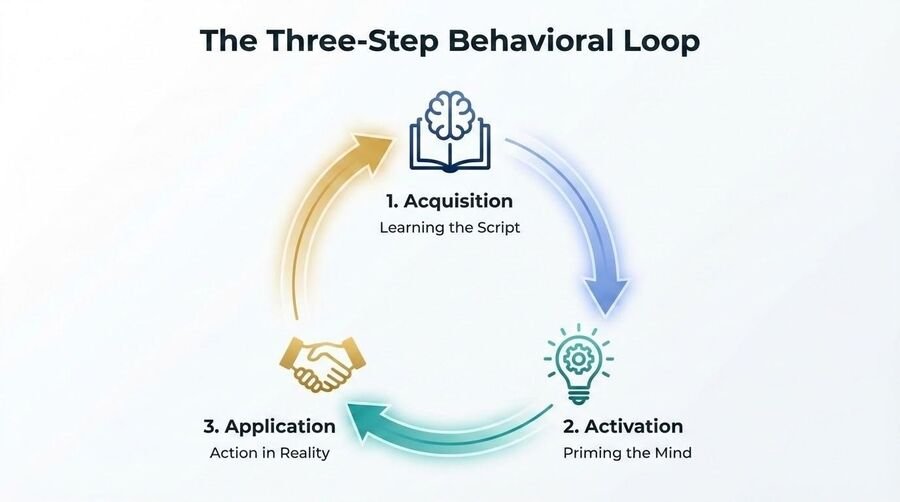
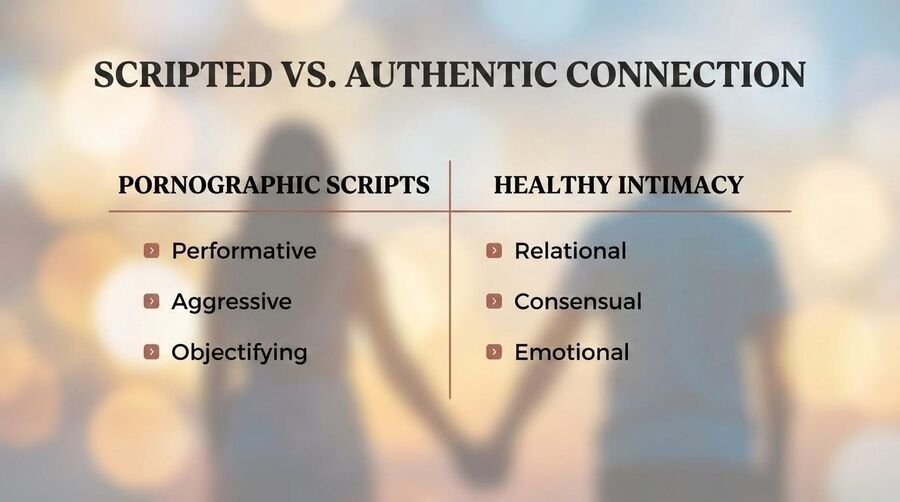

Sexual behavior isn't improvised from scratch; it runs on sexual scripts — culturally supplied templates for who does what, when, and what it's supposed to mean. Simon & Gagnon's script theory is the classic frame. The media-focused extension is the 3AM model (Wright), which specifies how media content becomes personal behavior in three steps:
You learn a script from media — pornography, shows, music, peers-as-media. It enters memory as a template for "how this goes," whether or not you endorse it.
A situation primes the stored script, making it cognitively available in the moment — often below awareness. Availability, not just possession, is what matters.
The activated script guides behavior or judgment — but only when it fits the person's motives, identity, and context. Application is conditional, which is exactly why media effects are moderated, not automatic.
The pedagogical payoff of the third A: media doesn't inject behavior. It supplies and primes scripts that get applied conditionally. That is why "porn causes X" claims almost always overreach — they collapse three probabilistic steps into one deterministic arrow.
"Porn addiction rewires the reward system" is a claim that outruns its evidence. The research base is mostly cross-sectional and correlational, drawn from modest samples — it can show that heavy use co-occurs with distress or with brain differences, but it can't establish that porn caused them (distress could drive use, not the reverse; a third factor could drive both). Tellingly, "porn addiction" is deliberately not a diagnosis in DSM-5-TR. ICD-11 includes Compulsive Sexual Behavior Disorder — an impulse-control condition, pointedly not framed as an addiction, and not porn-specific. The defensible statement: some people experience their use as compulsive and distressing, and that distress is real and treatable — but the confident "rewiring" story is not yet earned by the data.
What teens actually encounter
The 3AM model tells you how a script gets from a screen into a person. It doesn't tell you how many screens. Before we go further, we need the denominator — because almost every claim you'll hear about pornography and teenagers is a claim about this population, whether or not the person making it has looked at the numbers.
Read the third number carefully, because it complicates the acquisition step you just learned. Most script acquisition here is unsought. The dominant cultural image is a teenager searching for pornography. The dominant reality is a teenager scrolling past it. A prevention model built around interrupting a seeker is aimed at a minority of the exposure.
The gender pattern says the same thing from another angle. Boys and girls differ modestly in whether they've seen pornography (79% vs. 68%) and sharply in whether they've sought it (53% vs. 32%). Exposure is close to universal; searching is what's gendered. Any explanation that treats those as one variable will get both wrong.
The part that's genuinely new
By 2025 the environment had added a category that didn't meaningfully exist when the first survey ran: sexual imagery generated or altered by AI.
The circulation numbers make it concrete: 18% of all teens have created this content or know someone who has, 25% have shared it or know a sharer, and 37% of that sharing group say it circulates in person, at school.
This is the structural difference from conventional pornography, and it's worth stating plainly: traditional pornography depicts strangers who, whatever else is true, participated. Nudification tools depict classmates who were never asked. Same screen, categorically different act.
Unit 6 gave you minority stress; this unit spent it. Here's another transfer: the hot/cold cognition split from Unit 5 usually gets applied to the person taking the risk. Flip it. Fabricating an image of a classmate is a cold-cognition act — deliberate, unhurried, performed alone at a keyboard with full prefrontal resources available. That matters for how we assign responsibility, and it's why "teen brain" explanations don't do the work here that they do for impulsive risk-taking.
The moral gap
Two findings from the same teens, held simultaneously: 82% agree that creating this content of someone without permission should be illegal — and 23% agree it's less harmful than real pornography "because no one gets hurt."
That is not simple hypocrisy. It's a live demonstration of what script theory predicts: a norm can be endorsed in the abstract (cold) and suspended in the specific case (hot, social, funny-in-a-group-chat). It's also a factual error with felony consequences — AI-generated sexual imagery of anyone under 18 is child sexual abuse material, full stop, and the fabrication doesn't launder it.
And they're doing it without us
Only 20% of teens have ever discussed AI sexual content with a trusted adult. 34% say they'd like to but don't know how to start. 44% say school has taught them nothing about identifying AI-generated content. Asked who they'd feel comfortable telling: close friends 48%, parents 42%, a school counselor or teacher 13% — and 19% say no one at all.
Set that last figure beside the 37% who say this content moves through their school in person. The institution most likely to host the harm is the one least likely to hear about it.
What teens said would change that: knowing the adult would understand (59%) and knowing they wouldn't be blamed (53%). Return to the fork this unit opened with. That is an asset-model request — competence, not containment — and the adults are largely answering with silence.
Both surveys are opt-in online panels, not probability samples, and both required a parent to consent before the teen answered — which plausibly understates exposure in less-monitored households. They're cross-sectional, so nothing here licenses a causal claim. One wrinkle worth noticing: the 2023 report declined to compute a margin of error on the grounds that you can't for a non-probability sample; the 2026 report reports ±2.7 points for a comparably recruited one. The age-of-first-exposure item also changed base and brackets between waves, so "average age 12" and "52% by age 12" are not the same statistic. Use the figures — they're the best national estimates available — but cite them as survey estimates, not measurements.
Sources: Mann et al. (2026); Robb & Mann (2023), Common Sense Media.
Interactive · Predict the number
Guess before you tap
Guess before you scroll. Most people miss at least two of these. Commit to a number for each card, then tap to reveal.
74% — and it was 73% three years earlier. Near-universal, and flat.
79% — mostly social feeds, embedded website content, and game ads. Unsought, not searched for.
20% — while 34% say they'd like to but don't know how to start.
13% — and 19% say no one at all.
Most people overestimate #1 and #3, and badly overestimate #4. The gap between what adults assume teens have been told and what teens report being told is the intervention target of this whole section.
Interactive · Sexting — sort the harm
Experimental, aggravated, or abuse?
"Sexting" collapses three very different things under one word — and treating them the same is both bad science and bad policy. Researchers distinguish experimental sexting (consensual, developmentally ordinary) from aggravated incidents (coercion, adults, or malicious sharing) and from image-based sexual abuse (nonconsensual creation or distribution, including AI). Label each.
Why it matters: a legal or educational response that treats consensual experimental sexting as identical to image-based abuse both over-punishes ordinary teens and under-names real victimization. Precision here is protective — for everyone in the picture.
The consent standard has shifted from "no means no" toward Informed, Enthusiastic, and Reversible — consent must be knowing, actively willing, and revocable at any moment. AI image abuse is a live stress-test of the reversible clause. When a "nudify" tool fabricates an explicit image, consent was never given at any of the three points — not to the act, not enthusiastically, and there is nothing to revoke because the person was never asked. It exposes what the older framing missed: a harm can be total precisely because the consent process never began. This is not a hypothetical harm at the margins: among teens who have seen AI-generated sexual content, 24% have seen it depicting themselves or someone they know personally, and 11% have seen it of themselves (Mann et al., 2026).
The law is catching up. The federal TAKE IT DOWN Act (signed May 2025) criminalizes the publication of nonconsensual intimate images — including AI-generated ones — and requires covered platforms to remove them promptly on request. Use it as the unit's clearest case of consent theory meeting policy: "reversible" only means something if there is a mechanism to actually pull an image back down.
What actually works — sex education
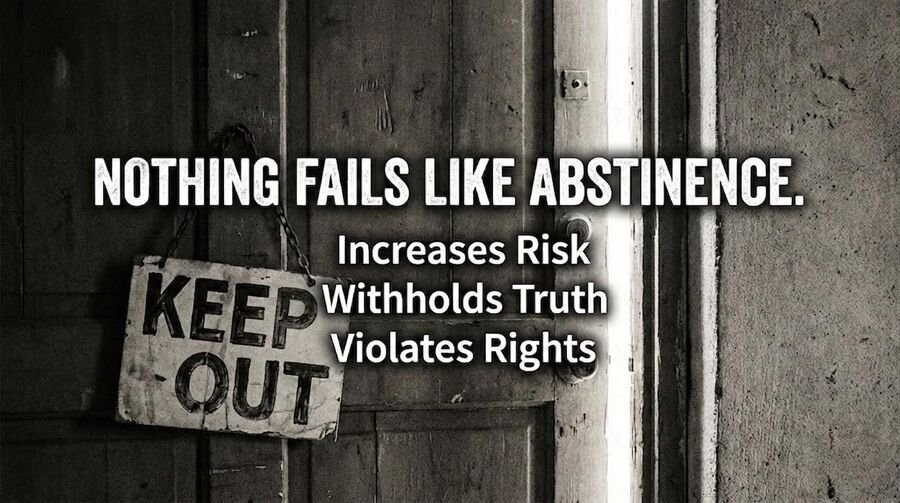
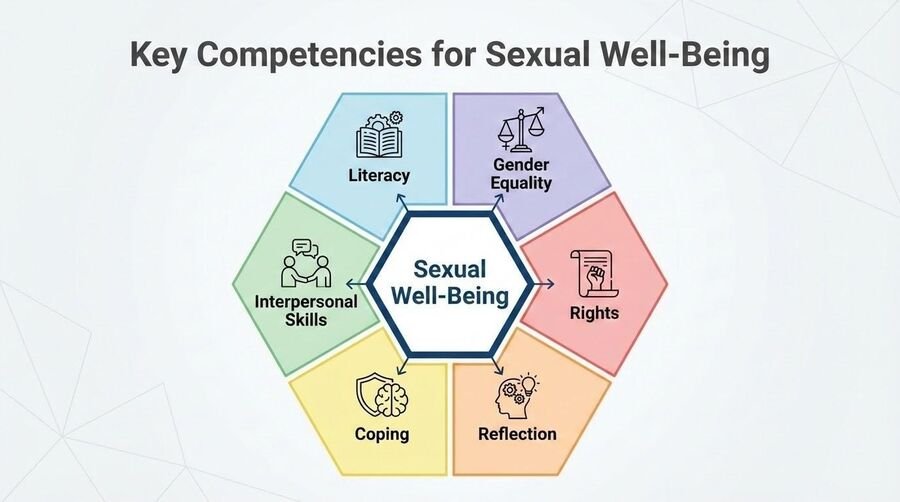
This is where the deficit/asset fork produces its sharpest empirical verdict. Abstinence-only-until-marriage programs are the deficit model in its purest form: withhold information, aim to prevent behavior. The evidence on them is strong and unkind — they do not delay sexual initiation and do not reliably reduce risk. Comprehensive sex education — which teaches abstinence and contraception, consent, communication, and healthy relationships — is associated with better outcomes: later initiation for some, more consistent protection, and improved knowledge and skills.
Notice the asset model doesn't ignore abstinence — comprehensive programs include it. The difference is that they refuse to withhold the rest. That's the whole ballgame: giving young people more competence, not less information, is what the data reward. Healthy sexual development isn't the absence of sex — it's the presence of knowledge, agency, mutuality, and safety.