One orientation before we go deeper. There are two ways genes matter, and the unit keeps them apart on purpose. Evolution explains why the human genome looks the way it does — a story about ancestors over millions of years. Behavior genetics explains why you differ from the person next to you right now. Same molecules, two completely different questions. Most of the confusion in this unit comes from answering one when you meant the other.
The single biggest slip here: reading "heritability = 0.6" as "60% of my trait is genetic." It isn't. Heritability is a statement about variation across a population in a specific environment — it says nothing about any one person, and it does not mean "unchangeable." I'll defend that claim in full below; for now, just distrust the intuitive reading.
The scaffolding: from Darwin to the double helix
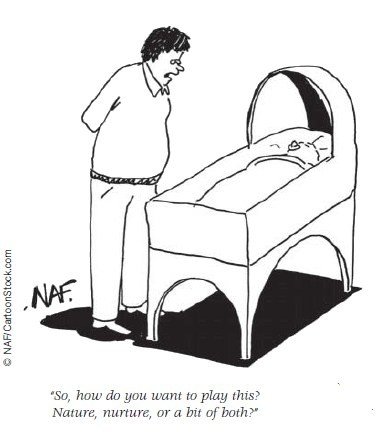
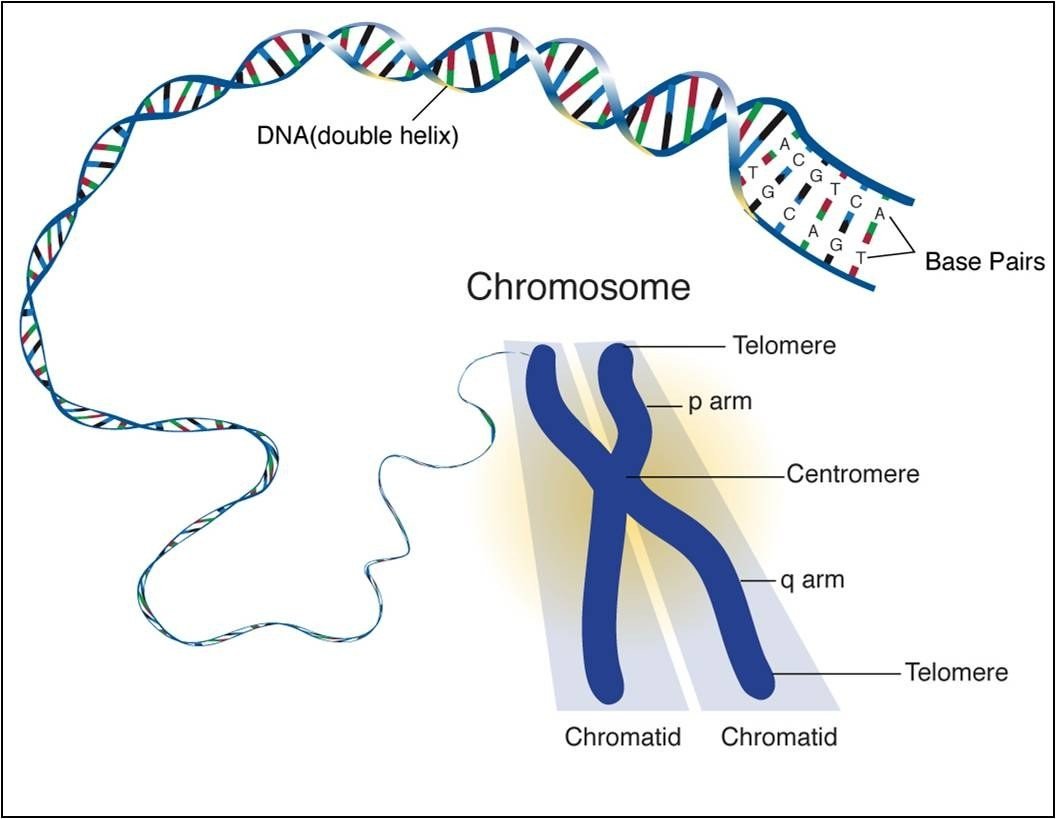
Let's set the pillars in order. Darwin (1859) proposed natural selection: heritable variants that improve survival and reproduction become more common over generations. He had no idea how traits were inherited — that mechanism arrived in two waves. Mendel (1860s), working with pea plants, discovered that inheritance comes in discrete units (genes) that follow dominant/recessive rules. Then Watson and Crick (1953) described the double-helix structure of DNA — building directly on the X-ray crystallography of Rosalind Franklin, whose "Photo 51" was essential and whose credit was, for decades, badly underplayed.
The hierarchy that follows is worth having cold, because every later idea rides on it:
DNA is the molecule; it's coiled into 46 chromosomes (23 pairs) in almost every human cell. One of each pair comes from each parent.
A gene is a stretch of DNA that codes for something. We have roughly 20,000 protein-coding genes. The full set is the genome — and most of it isn't protein-coding at all.
Genotype = the genes you carry. Phenotype = the observable trait that results — and it emerges from genotype plus environment plus which genes are switched on (gene expression).
Numbers to carry out of this unit: humans share ~98–99% of DNA with chimpanzees and ~99.9% with each other. Identical (MZ) twins share ~100% of their genes; fraternal (DZ) twins share ~50%, same as any siblings. That last contrast is the entire engine behind twin studies — hold onto it.
From Mendel's peas to polygenic scores
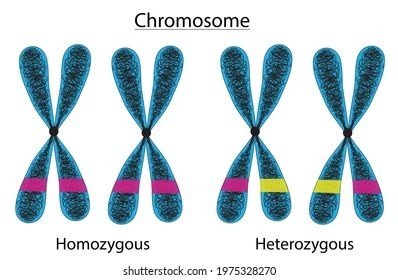
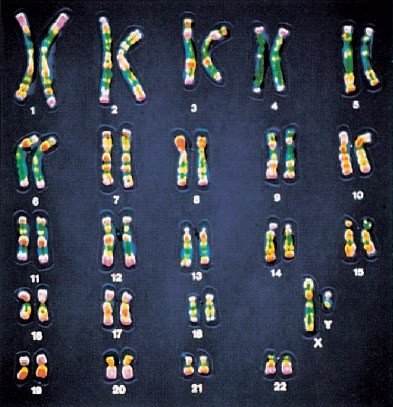
Here's where the simple picture stops short. Mendel's peas are taught because they're clean: one gene, dominant/recessive, tidy ratios. And a few human conditions really do work that way (cystic fibrosis, Huntington's, sickle-cell trait). But nearly every trait that matters for adolescent psychology is not like that. Height, educational attainment, depression risk, ADHD, personality — these are polygenic: influenced by hundreds or thousands of genetic variants, each contributing a sliver.
It's also worth retiring a specific myth: the old "eye color is a simple recessive gene" and "male-pattern baldness is one gene from your mother's side" examples are outdated oversimplifications. Both are polygenic. They persist in textbooks because they make convenient Punnett-square exercises, not because they're accurate.
The modern workhorse for studying polygenic traits is the genome-wide association study (GWAS), which scans the whole genome across huge samples to find variants statistically linked to a trait. From a GWAS you can build a polygenic score — a single number summarizing someone's genetic loading for a trait. Powerful, but it comes with honest caveats that separate a careful student from a hype-reader:
A polygenic score can shift the average outcome across thousands of people, yet be nearly useless for forecasting any single person's life. High score, ordinary outcome — and vice versa — is completely routine. Treating a polygenic score as a personal destiny is a category error.
Most large GWAS were run in people of European ancestry. Scores built on those samples predict far more poorly in people of African, East Asian, or other ancestries — an equity problem, not just a statistical footnote. Applying such scores across ancestries can mislead.
Polygenic scores can partly capture environmental advantage too — for example, educational-attainment scores are entangled with family circumstances. A score for a socially loaded trait is never a pure biology readout.
Mendel is the appetizer, not the meal. Learn the dominant/recessive logic because it explains the handful of single-gene conditions and because it's the historical root of the field. But the moment you're talking about behavior, mood, cognition, or personality, mentally swap "one gene" for "thousands of variants, each tiny, plus environment." The genetics of the adolescent mind is polygenic all the way down.
What heritability actually means
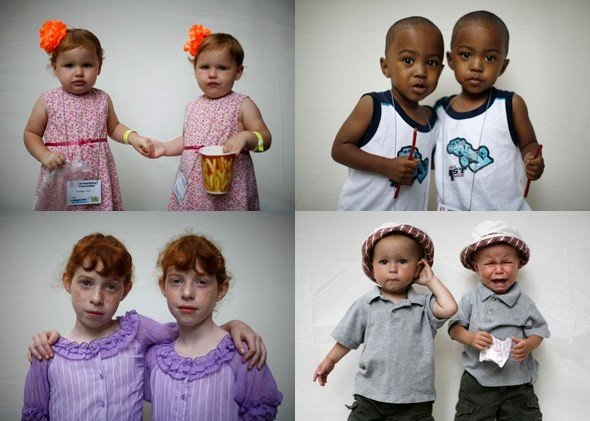
Heritability is easy to define and easy to misread — the definition is where nearly all the damage happens, so let's slow down. Heritability is the proportion of the variation in a trait across a population that is statistically attributable to genetic variation, in a particular environment. Read that twice. Four consequences follow, and each one defeats a common misreading:
Heritability is a population statistic, not a personal one. "Height is ~80% heritable" does not mean 80% of your height came from genes and 20% from lunch. It means that, across a population, about 80% of the differences in height trace to genetic differences. For a single person, the question "how much of my height is genetic?" has no coherent answer — you can't unmix the flour from the baked cake.
Heritability is environment-specific and can change. Make an environment more uniform (everyone gets great nutrition) and heritability of height goes up, because now the remaining differences are mostly genetic. Change the environment and the number changes. It's a snapshot of one population in one setting, not a law of nature.
High heritability does NOT mean unchangeable. Vision needs no defense of this: nearsightedness is highly heritable, and eyeglasses fix it completely. Heritable ≠ fixed, ≠ untreatable, ≠ destiny.
If you remember one sentence from this unit, make it this: heritability describes differences between people, not the makeup of any one person, and never means "can't be changed." It's worth locking in because the intuitive reading is wrong in three separate ways at once.
Interactive · Heredity–environment correlations
Passive, evocative, or active?
Genes and environments aren't independent — they correlate, in three classic ways (Scarr & McCartney). Passive: parents give you both genes and a matching environment. Evocative: your genetically influenced traits pull certain reactions out of other people. Active (niche-picking): you seek out environments that fit your genes. Label each scenario — the card turns green when you're right.
Why it matters for adolescence: the balance shifts with age. Young children live in mostly passive correlations (their world is chosen for them); adolescents, gaining autonomy, tip toward active niche-picking — one reason peer environments look increasingly "self-selected" in the teen years.
Shared vs. nonshared environment
Twin and adoption studies split the environment into two pieces, and the finding is one of the most surprising in the field. Shared environment is everything siblings raised together have in common — same house, same parents, same neighborhood. Nonshared environment is everything that makes siblings differ — a specific teacher, a friend group, an illness, a birth-order dynamic, even how each child interprets the same family.
The counterintuitive result: for many personality and behavioral traits, the shared environment contributes surprisingly little by adolescence, while the nonshared environment matters a lot. Siblings raised in the same home are often about as different as strangers on measures like personality — because what shaped them most was the part of the environment they did not share.
This is why "same parents, totally different kids" is not a mystery — it's the expected result. And it reframes parenting: the impact isn't in providing a uniform household so much as in the countless individualized experiences each child has. Keep this in mind for the family-relationships and identity units later in the course.
Evolutionary psychology — and its limits
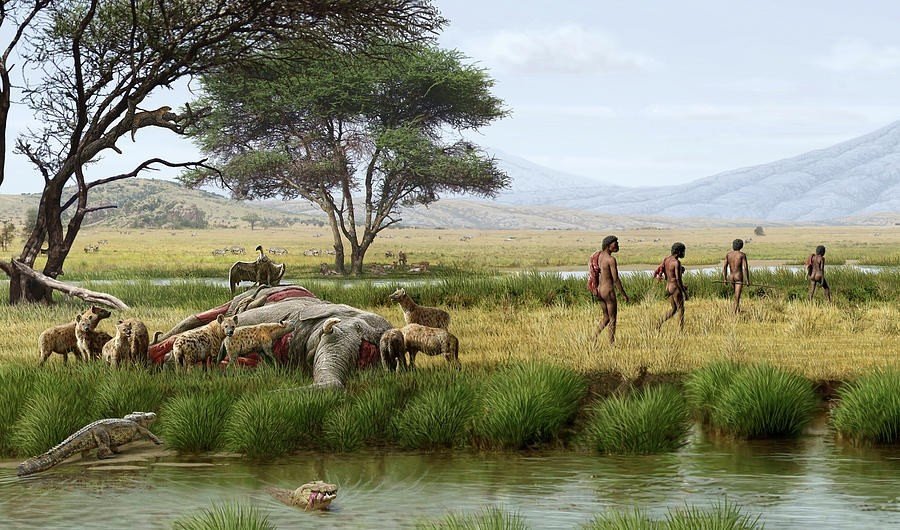

Evolutionary psychology asks whether some human tendencies are adaptations shaped by selection in our ancestral past. A key concept is the EEA — the environment of evolutionary adaptedness, the ancestral conditions our minds were tuned for. When today's world differs sharply from that ancestral one, you get evolutionary mismatch.
The cleanest example: cravings for sugar and fat. In an ancestral world of scarcity, a strong pull toward calorie-dense food was highly adaptive. In a modern world of cheap, engineered abundance, the same craving becomes maladaptive — a major driver of poor health. The gene didn't change; the environment did.
Not every trait is an adaptation. Adaptationism — the habit of assuming every feature was selected for its current use — is a real risk, and evolutionary biology polices it hard. Two correctives to keep handy. Spandrels (Gould & Lewontin's term): byproducts of other adaptations that were never directly selected — like the way reading uses brain circuitry that evolved for something else. Genetic drift: random changes in gene frequencies that spread for no adaptive reason at all. A good evolutionary explanation has to beat these alternatives, not just tell a plausible "just-so story."
Interactive · Case study in scientific self-correction
The rise and fall of "the depression gene"
This is a true story about how science corrects itself. Tap through the four cards in order — each reveals the next turn. It's also a warning about a whole genre of seductive findings.
Caspi and colleagues reported that a variant of the serotonin-transporter gene, 5-HTTLPR, interacted with stressful life events to predict depression. A "gene × environment" story — celebrated, cited thousands of times, taught everywhere.
"A gene for X, triggered by stress" is irresistibly tidy. It fits how we want genetics to work: one gene, one clear effect. That intuitive pull is exactly why such stories should be treated with suspicion, not enthusiasm.
Border and colleagues (American Journal of Psychiatry) tested 5-HTTLPR and other "candidate genes" for depression in very large samples. The famous effects largely failed to replicate. The single-gene story didn't hold up.
The field moved from single "candidate genes" to genome-wide methods (GWAS, polygenic scores). The lesson isn't "science failed" — it's science working: a beloved result was tested honestly and set aside. That's the system functioning as designed.
Conceptual cleanup: 5-HTTLPR is a genetic polymorphism involved in a proposed gene–environment interaction — it is not epigenetics. Epigenetics means chemical marks (like methylation) that change gene expression without changing the DNA sequence. These two get blurred constantly; keep them separate.
Epigenetics — the honest version
DNA is the score; epigenetics is which parts of the orchestra are actually playing. Chemical marks on the genome — most famously DNA methylation — turn genes up or down without changing the underlying sequence. This is how one genome builds a liver cell and a neuron, and it's genuinely responsive to environment and experience. That much is solid.
The frontier — and it is a frontier, not settled ground — is transgenerational epigenetic inheritance: the claim that an ancestor's experience can leave epigenetic marks that pass to descendants.
The famous examples deserve honesty about their status. The Dutch Hunger Winter (a 1944–45 famine) is linked to lasting health and epigenetic differences in people who were prenatally exposed — a striking natural experiment. Mouse studies claim a "fear scent" conditioned in one generation shows up in the next. These are fascinating and worth teaching, but in mammals and humans the case for true inheritance across generations remains contested. Prenatal exposure changing the exposed fetus is well established; a mark surviving through the germline into grandchildren is a much stronger claim, and the evidence isn't there yet. Present it as an open question, not a fact.
Two recent milestones sharpen the "we're all nearly identical" point. In 2022, the Telomere-to-Telomere (T2T) consortium published the first truly complete, gapless human genome sequence — the ~8% the original Human Genome Project couldn't finish. Then in 2023, the Human Pangenome Reference replaced the single "one person" linear reference with a collection of dozens of genomes from diverse ancestries. Together they reinforce a bedrock fact: humans are ~99.9% genetically identical, and the small variation that exists does not map onto the social category of "race," which is not a biologically meaningful genetic division.
Sources: Telomere-to-Telomere (T2T) consortium, 2022; Human Pangenome Reference Consortium, 2023.
Notice the through-line of this whole unit: every honest answer is "genes and environment, in interaction, at the level of populations." Single-gene stories, personal heritability readings, and settled transgenerational claims all fail for the same reason — they promise a simplicity biology doesn't have. Carry that skepticism into the brain unit next; it'll serve you well.