Here's the shape of the unit. Section one is a lie-detector: the methods that let you tell whether a headline about teenagers is earned or just plausible. Section two is a museum of big ideas — Darwin to Vygotsky — but we'll walk through it holding the lie-detector, asking of each theory the only question that matters: what would prove this wrong?
If you remember one thing: only a true experiment — with random assignment — can support a claim about cause. Everything else in the methods toolkit is powerful, but it can only show that two things travel together. Get that distinction cold and half of this unit is already yours.
Defining development — and a stage you're living in
Before methods, a definition. Development is systematic, age-related change across the lifespan — change that has a pattern, not just random fluctuation. Adolescent psychology sits inside that larger lifespan story, which is why this course keeps handing threads forward and backward between units.
Emerging adulthood (Arnett, 2000) is the newer stage between adolescence and full adulthood, roughly ages 18–29. It's worth knowing its five features by name, and because — odds are — you're standing in the middle of them right now.
The active "trying on" of possibilities in love and work. Not yet locked in — deliberately kept open while you test what fits.
Frequent changes of address, job, major, relationship. The plan keeps getting revised — that churn is normative here, not a sign of failure.
Fewer daily obligations to others than at any other adult stage, so decisions can be made largely for and about the self. Not selfishness — a window of low external constraint.
Ask emerging adults if they feel like adults and many say "yes and no." Neither fully adolescent nor fully adult — a subjective limbo.
A sense that dreams are still reachable and life is largely unwritten. Options feel maximally open before commitments narrow them.
The model fits WEIRD, middle-class samples best. For young people who must work, parent, or support family at 18, the "self-focus" window never opens. Emerging adulthood is partly a privilege, not a universal stage.
Resilience isn't the absence of adversity — it's good outcomes despite it. It's worth pinning down: resilience is the demonstrated capacity to adapt well in the face of significant risk or hardship. Crucially, it's not a fixed trait you either have or lack; it emerges from ordinary protective systems — a caring adult, a sense of competence, a community that shows up. That's the optimistic mirror of Unit 1's Positive Youth Development: the same person who is "at risk" is also a system of strengths waiting to be supported.
Science confirms; it never proves
The scientific method — question, hypothesis, test, revise — has a philosophical engine underneath it, and it hinges on the single most misused word in undergraduate writing: proven.
Karl Popper's insight (mid-20th century) was that a scientific claim must be falsifiable — there has to be some possible observation that would show it's wrong. "Adolescents are moody because of the alignment of the planets" isn't falsifiable, so it isn't science. A hypothesis earns its keep by sticking its neck out.
And here's the twist students resist: even a hypothesis that survives every test isn't proven. It's confirmed — supported so far, still standing, still vulnerable to the next study. Science works by trying to disconfirm and failing. Write "the data confirmed the hypothesis," never "the data proved it."
Swap "proves" for "supports" or "is consistent with" in every paper you write for this course. It's not pedantry — it signals that you understand what a study can and can't do. Certainty belongs to math and logic; science trades in evidence that accumulates.
The designs, weakest-to-strongest for causal claims
Research designs form a ladder. Each rung buys you something the one below couldn't — and the top rung is the only one that can say the magic word, cause.
You watch and record without intervening — naturalistic observation, case studies, surveys. Fantastic for generating hypotheses and describing what actually happens. Says nothing about why.
You measure two variables and ask whether they move together. The correlation coefficient (r) runs from −1 (perfect inverse) through 0 (no linear relation) to +1 (perfect positive). Powerful for prediction — and the source of nearly every "study links X to Y" headline. But a correlation can arise from X→Y, Y→X, or a hidden third variable driving both. It cannot, by itself, establish cause.
You manipulate an independent variable and — this is the whole game — use random assignment to sort participants into conditions. Randomization scatters third variables evenly across groups, so if the outcome differs, the manipulation is the credible reason. This is the only design that licenses a causal claim. Its cost: artificiality and, often, ethical limits on what you're allowed to manipulate.
If experiments are the gold standard, why is so much developmental research correlational? Because you can't ethically or practically randomize the interesting variables. You cannot randomly assign teenagers to "neglectful parenting" or "early puberty" or "poverty." So developmental science leans hard on correlational and longitudinal designs and gets clever — statistical controls, natural experiments, twin studies — to approximate causal inference. Reading that literature well means holding two truths at once: the findings matter, and they rarely prove cause.
Interactive — correlation only, or causation?
Which claims have earned the word "cause"?
This is the load-bearing skill of the unit. A claim can be causal only if the study used a manipulation with random assignment. Read each one, decide what the design can support, and tap. The card turns green when you're right.
Pattern to internalize: if there's no random assignment, a third variable could be doing the work. Family-dinner teens may differ in a dozen other ways; park-rich neighborhoods tend to be wealthier. Randomization is what rules those rivals out.
Cross-sectional vs. longitudinal
One more design axis, and it's the one Unit 1 promised to explain. How do you study change over time?
Remember Unit 1's smartphone example? A cross-sectional study comparing 16-year-olds to 40-year-olds today can't tell whether a difference comes from age or from the era each grew up in — the two are hopelessly tangled when you only look once. A longitudinal study follows the same cohort forward, so any change you see is change within those people as they age. That's the tool that separates "teenagers are like this" from "this generation of teenagers is like this."
Connects to Unit 1 · age effects vs. cohort effects.
Ethics — and what's easy to miss
The three APA pillars are non-negotiable: informed consent (participants freely agree, knowing what's involved), protection from harm (risks minimized and justified), and confidentiality (data kept private). Good. Now the part that's easy to miss.
Adolescent research runs headfirst into a special problem: many participants are legally minors and cannot give consent. So the framework expands. An IRB (Institutional Review Board) must approve the study before it runs — an independent ethics check. A parent or guardian provides consent, but the minor separately provides assent: an age-appropriate "yes, I'm willing," with a real right to decline even if a parent agreed. Consent and assent are not the same word by accident — respecting a 14-year-old's "no" is an ethical obligation, not a courtesy.
The three-pillar list is a 1970s picture of research ethics. A 2020s course has to add the replication crisis: through the 2010s, psychologists discovered that a troubling share of famous findings didn't reproduce. The reforms that followed are now part of doing science honestly — reporting effect sizes (how big, not just "significant"), preregistration (declaring your hypotheses and analysis plan before collecting data, so you can't quietly move the goalposts), and open science (sharing data and materials). None of this was in the old ethics module, but it's the difference between a field that polices itself and one that hopes for the best.
The classic theories — a museum tour

Now the ideas the methods were built to test. Notice as we go: the strongest theories are the ones that made falsifiable predictions. Grand, sweeping theories that explain everything after the fact tend to explain nothing you could ever check.
Darwin didn't write a theory of adolescence, but his evolutionary framing set the stage: development is shaped by adaptation, and early experience matters for survival and reproduction. Hall borrowed this directly.
The "father of adolescence" (1904). His recapitulation idea — that each person re-lives the evolutionary history of the species as they grow — is now discredited. His "storm and stress" claim survives in modified form (Unit 1): real, but not universal.
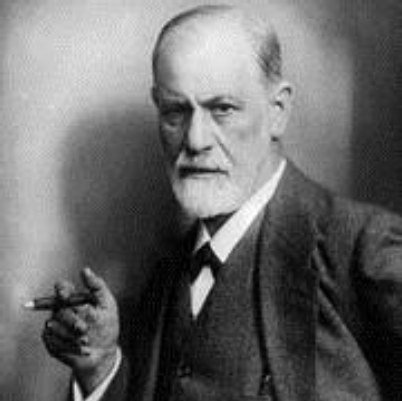
Freud placed adolescence in the genital stage, where mature sexuality reawakens the earlier oral/anal/phallic dynamics. His lasting contribution isn't the stages (largely unfalsifiable) but the idea of an unconscious and of defense mechanisms — see the flip cards below.
Erikson recast Freud's drama as social. Each stage poses a crisis; adolescence's is Identity vs. Role Confusion — the central task of figuring out who you are. His theory spans the whole lifespan (eight stages), unlike Freud's, which stalls in childhood. We build it out below with Marcia.
Behaviorism's radical move: study only what you can observe. Skinner's operant conditioning says behavior is shaped by its consequences — reinforcement makes it more likely, punishment less. Testable and powerful. Its limit: it treats the mind as a black box, which the next theorist pried open.
Bandura showed we learn by observing others (the Bobo doll studies) — no direct reinforcement required. His reciprocal determinism is the key upgrade: person × behavior × environment continuously shape one another. You're not just molded by your environment; you help select and create it.
Children are little scientists building mental models. Four stages: sensorimotor (birth–2), preoperational (2–7), concrete operational (7–11), and formal operational (12+) — the last being the capacity for abstract, hypothetical reasoning that makes adolescent thought possible. Critique: he underestimated younger children and the influence of culture.
Where Piaget saw a lone scientist, Vygotsky saw an apprentice. Cognition develops through social interaction and cultural tools (above all, language). His signature concepts — the Zone of Proximal Development and scaffolding — get their own interactive below.
The useful skill here isn't recalling "who said X." It's learning to place a scenario: is this a reinforcement story (Skinner), an observed-modeling story (Bandura), a stage-limitation story (Piaget), or a social-scaffolding story (Vygotsky)? Learn the theories by the kind of situation each one explains best.
Freud's lasting piece · defense mechanisms
Skip the psychosexual stages if you like — but the defense mechanisms are genuinely useful vocabulary for how people (adolescents very much included) manage anxiety. Flip each card.
Pushing a threatening thought or memory out of conscious awareness. The foundational defense — the mind burying what it can't face.
Refusing to accept an external reality that's too painful — "this isn't happening." Blocks the fact itself, not just the feeling.
Attributing your own unacceptable impulses to someone else. "I'm not angry — you're the hostile one."
Inventing a logical-sounding excuse for a behavior driven by a less flattering motive. "I didn't want that spot on the team anyway."
Redirecting an impulse from its real target to a safer one. Furious at a teacher, you snap at a sibling instead.
Channeling an unacceptable impulse into a socially valued activity — aggression into sport, restlessness into art. Freud saw this as the most mature defense.
Erikson needs Marcia
Erikson named the adolescent task — identity — but left it hard to measure. James Marcia (1966) turned it into something testable and it's still used today. His move: cross two dimensions. Has the person explored options (been through a "crisis")? And have they made a commitment? Two yes/no answers give four identity statuses.
Marcia's four statuses
Match each snippet to its status. Each is defined by whether the person has explored and whether they've committed. Tap your answer — the card turns green when correct.
The subtle one is foreclosure: it looks mature (a firm commitment!) but skipped the exploration. Marcia's point is that a committed identity you never questioned is fragile — and that moratorium, though it feels like being lost, is often the healthiest place to be mid-adolescence.
Marcia's statuses are still in research use because they did what Erikson's prose couldn't: turned "identity" into two measurable questions. That's the falsifiability lesson in action — a theory you can operationalize is a theory science can work with. Ideas that can't be measured tend to quietly leave the field.
Vygotsky's three zones
The Zone of Proximal Development (ZPD) is easy to half-understand. The clean way in: picture three zones, and the ZPD is the interesting middle one. Flip each card.
Already mastered. No learning happening here — the task is too easy to grow from. This is yesterday's ZPD, now internalized.
The Zone of Proximal Development: too hard alone, but achievable with a more knowledgeable other. This is where learning lives — and where scaffolding (temporary, faded support) does its work.
Beyond reach for now, even with support. Frustration, not growth. Good teaching aims support at the middle zone, not this one.
Scaffolding is the tutoring move that matches the ZPD: give just enough help to make the task possible, then withdraw it as the learner takes over — like the scaffolding on a building, temporary by design. Contrast this sharply with Piaget: for Piaget, a child can't reason abstractly until they reach the formal-operational stage; for Vygotsky, the right social support can pull a learner into competence they couldn't reach alone. Two different engines of development — biological readiness versus social apprenticeship.
No single theory explains adolescence. Working developmentalists take an eclectic orientation: borrow the reinforcement lens from Skinner, the modeling lens from Bandura, the stage lens from Piaget, the social-scaffolding lens from Vygotsky, and apply whichever fits the question. That's maturity, not indecision. But notice what this whole roster is missing for a 2020s course: the adolescent brain. Prefrontal maturation and the dual-systems model — an early-maturing reward system racing a still-developing control system — are absent from these classic theories because the imaging tools didn't exist yet. That story is the heart of Unit 5, and it's the modern layer that ties Skinner's reinforcement, Bandura's environments, and Piaget's reasoning back to biology.