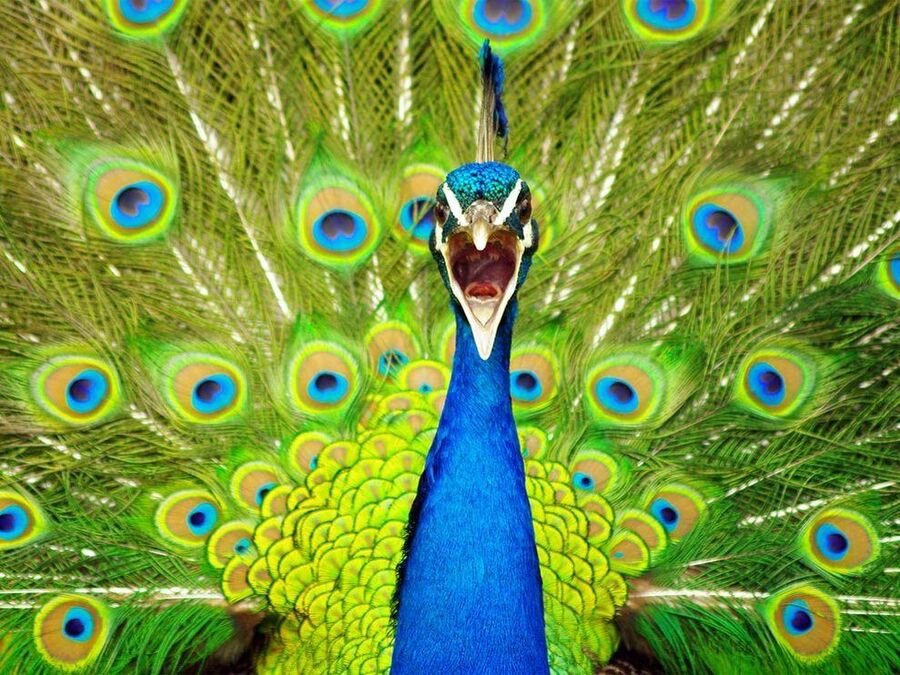
Darwin had a problem, and he knew it. Natural selection is supposed to weed out costly traits — so why does the peacock drag around a five-foot tail that slows him down, burns calories, and practically waves a flag at predators? Darwin's answer split evolutionary theory in two: alongside selection for survival, there is selection for mating success. That second engine is what this unit is about, and it's also where evolutionary psychology gets both its most cited findings and its most heated arguments.
Darwin's puzzle and the two engines of sexual selection
A trait doesn't have to help you live longer to spread through a population — it only has to help you reproduce more. If a costly, even dangerous trait reliably gets you more mates or better mates, it can be favored anyway, because reproductive success is the currency evolution actually pays in. Darwin proposed two distinct mechanisms that produce this pattern, and your slides likely just named them — worth pulling apart here, because they work through different social routes.
Intersexual selection
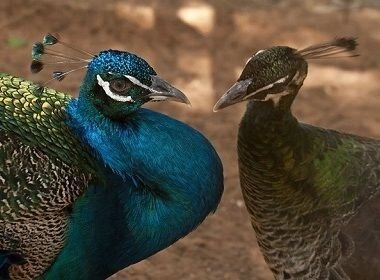
Selection driven by mate choice — one sex evolves preferences, and the other sex evolves traits that satisfy them. The peacock's tail exists because, generation after generation, peahens preferred males with bigger, more symmetrical, more colorful tails. The male ornament and the female preference co-evolve together.
Intrasexual selection
Selection driven by competition within a sex for access to mates, independent of what the other sex prefers. Antlers, elaborate horns, and body size in many species evolved because males use them to fight or intimidate rival males — the trait wins by beating competitors, not by being chosen.
Both mechanisms can operate in the same species at once, and both show up in the human mate-preference literature you're about to read — sometimes tangled together, which is part of why interpreting that literature is harder than it first looks.



Why would a preference for costly ornaments evolve?
Intersexual selection raises an obvious follow-up question: why would one sex evolve a preference for a trait — like the peacock's train — that actively handicaps the individual carrying it? Two classic answers compete, and both are probably partly right. The first is Ronald Fisher's (1930) runaway selection: once a preference for some trait exists in a population, females who choose ornamented males tend to have sons who inherit the attractive trait and daughters who inherit the preference for it, so trait and preference reinforce each other in a self-amplifying loop that can push an ornament to extravagant, otherwise-pointless extremes. The second is Amotz Zahavi's (1975) handicap principle, a form of honest signaling: precisely because the ornament is so costly, only a genuinely healthy, high-quality individual can afford to grow it and haul it around, so the ornament becomes a hard-to-fake advertisement of underlying fitness. A frail male simply couldn't survive dragging a giant tail past predators. On this view the "wastefulness" of the display is the entire point — a signal that can be cheaply faked isn't worth attending to. These ideas matter for the human material ahead, because they show that even a "purely" evolutionary account of attraction contains real theoretical disagreement about mechanism, not one settled story.
Why would the sexes want different things? Parental investment theory
Trivers's (1972) parental investment theory gives sexual selection its logic in humans and elsewhere. The core claim: whichever sex invests more time, energy, and risk per offspring should be more choosy about mates, because a bad choice costs them more. The sex that invests less can afford to compete more freely for mating opportunities, because the cost of a failed attempt is lower.
◆ The claim is about averages, not individuals
Parental investment theory predicts population-level tendencies, not a rule for any one person. It says nothing about what any individual man or woman wants, values, or does. Keep that distinction in mind for everything that follows — it's the difference between a defensible evolutionary hypothesis and an overreaching one.
Sexual strategies theory: short-term and long-term mating
Buss and Schmitt (1993) built sexual strategies theory directly on parental investment. The starting point is the minimum investment each sex needs to produce a child: for a woman, nine months of pregnancy at the very least; for a man, potentially a single act of sex. From that asymmetry the theory predicts that the two sexes should pursue different strategies in short-term mating, where a poor choice costs a woman far more, but converge in long-term mating, where both partners invest heavily. And that's roughly what the survey data show. On average, men report wanting more sexual partners, let less time pass before seeking sex, are more willing to consent to sex with a stranger, and lower their standards for short-term encounters. But when both people are pursuing a long-term relationship, both sexes become extremely choosy, and the qualities they want are nearly identical: intelligent, kind, understanding, dependable, honest, loyal, loving. The famous sex differences (resources versus youth and health) sit on top of that shared list, not instead of it.
Two features of the theory keep it from being the caricature you'll sometimes hear. First, humans have mutual mate choice — unlike species where one sex does all the choosing, both women and men select, so both sexes carry preferences and both sexes carry traits shaped by the other's preferences. Second, strategies are supposed to be flexible, not fixed: which strategy a person pursues depends on culture, social context, the local sex ratio, and their own mate value. The same cautions from the callout above apply — these are population averages with enormous overlap, drawn mostly from self-report.
Buss (1989): mate preferences across 37 cultures
Buss (1989) tested parental-investment predictions directly, surveying thousands of people across 37 cultures on what they wanted in a long-term mate. The study reported some patterns consistent with the theory — for instance, average differences in the weight men and women placed on certain traits when rating mate preferences, patterns that showed up across a wide range of cultures and were often framed as evidence for evolved, universal mating psychology.
That's the finding your slides likely named. What they may not have had room to unpack are the caveats that responsible reporting of this study requires — and they matter as much as the headline result.
◆ The caveats that belong right next to the finding
First, the overlap between men and women on every trait dwarfed the average difference — knowing someone's sex tells you very little about their individual preferences. Second, the size and even direction of some patterns shifted with culture, and later work links this to women's economic power and independence: where women have more economic autonomy, some of the classic sex differences shrink. Third, the data are self-report and correlational — what people say they want in a survey is not the same as who they actually choose, and the design can't establish that evolution, rather than culture or economics, caused the pattern. Treat the finding as real but partial, not as proof of a fixed, universal design.
The jealousy debate: a live disagreement, not a settled fact
If parental investment theory predicts different mating strategies for men and women, does it also predict different jealousy triggers? Buss et al. (1992) argued yes: because paternity is never 100% certain for a man but maternity always is for a woman, men should be more distressed by a partner's sexual infidelity (risk of investing in another man's offspring), while women — who risk losing a partner's investment and resources — should be more distressed by emotional infidelity. Their forced-choice data supported this pattern.
DeSteno and Salovey (1996) pushed back hard, and this is a genuine scientific disagreement worth sitting with rather than resolving too quickly.
◆ Update: is the sex difference in jealousy real, or an artifact?
DeSteno and Salovey (1996) and other researchers argued that the sex difference Buss et al. (1992) reported depends heavily on how the question is asked. Forced-choice formats — pick sexual infidelity or emotional infidelity, one or the other — can manufacture or exaggerate a difference that shrinks substantially, or in some studies nearly disappears, when people instead rate their distress on continuous scales for each type of infidelity separately. The debate isn't fully settled either direction: some researchers still defend an evolved-module account, others favor cognitive or social explanations for why the forced-choice format produces the pattern it does. The honest summary for a psychology course: this is an active empirical argument, not a closed case.
Psychological adaptations, and why the mind makes "smart" mistakes
Jealousy is Buss's (2024) go-to example of a psychological adaptation, and the contrast he draws is instructive. A callus is a physiological adaptation: an input (repeated friction on the sole of your foot) triggers a procedure (the skin grows extra cells) that produces an output (tougher skin). A psychological adaptation has the same input–procedure–output structure, but it runs in the mind: an input (your partner flirting with a rival) triggers a procedure (an appraisal of how much of a threat that rival poses) that produces an output (anything from vigilance to a confrontation). Neither kind of adaptation pops up out of nowhere — both need an environmental trigger, which is why Buss calls evolutionary psychology an interactionist framework rather than a theory of rigid instincts.
The most useful psychological-adaptation idea in this unit may be error management theory (Haselton & Buss, 2000). Whenever you must decide under uncertainty, there are two ways to be wrong, and they usually don't cost the same. You hear a rustle on a dusk trail: treat it as a snake when it's only wind and you've lost a few seconds on a detour; treat it as wind when it's a snake and you may lose your life. Faced with that kind of cost asymmetry generation after generation, selection favors a mind that leans toward the cheaper error — a built-in bias that's inaccurate on average and adaptive anyway. The visual descent illusion is one example: people overestimate a drop when looking down from a height compared with looking up the same distance, which keeps them appropriately nervous about falling. The auditory looming bias is another: a sound moving toward you seems closer than the same sound moving away.
The version that matters for this unit is the sexual overperception bias. For ancestral men, missing a real mating opportunity was the costlier error; for women, the costlier error was a false positive that led to a poor mating decision. Error management theory therefore predicts that men, more than women, will read sexual interest into minimal cues — a friendly smile, a casual touch — and that is one of the better-replicated findings in the mating literature, including in live speed-dating studies where men inferred more interest than the women reported intending (Perilloux et al., 2012). Note what the theory does and doesn't claim: it explains a statistical lean, not any particular man's behavior, and it doesn't excuse acting on a misread.
The science of beauty: what makes a face attractive, and why it matters more than people admit
Two well-supported cues to facial attractiveness are averageness (faces closer to the population average tend to be rated as more attractive) and symmetry (more bilaterally symmetrical faces tend to be rated as more attractive). Both have been proposed as cues that may signal underlying health or developmental stability, though how directly attractiveness judgments track actual health remains a topic researchers continue to study.
Averageness and symmetry aren't the whole list. Faces also gain from youthfulness, clear and unblemished skin, and sex-typical features — smaller chins, higher brows, and smaller noses read as feminine and raise women's rated attractiveness, while the more masculine versions do the same for men; the pattern repeats in voices, where higher pitch is preferred in women and lower pitch in men. Bodies contribute too, most reliably through a sex-typical waist-to-hip ratio and a physique that is neither emaciated nor obese. And appearance isn't destiny: people rate the same face as more attractive when it's smiling and expressive, and when they've just read a warm description of the person's personality — "pretty is as pretty does" has some data behind it. Cultural variation is real, but it lives mostly at the edges: societies differ a good deal in ornamentation, body modification, and how they judge heavier body sizes, yet infants only a few months old already look longer at faces adults rate as attractive, and people in cultures isolated from Western media, such as the Tsimane' of the Bolivian rainforest, pick out largely the same faces as attractive that Americans do (Franklin & Zebrowitz, 2024). Whatever beauty is, it isn't only learned from advertising.
But the more consequential finding for everyday life isn't about what makes a face attractive — it's about what we do once we've decided someone is. Dion, Berscheid, and Walster (1972) documented the halo effect for physical attractiveness, memorably summarized as "what is beautiful is good": people spontaneously assume attractive individuals also have other positive traits — more competent, more sociable, more successful — traits that have nothing logically to do with facial symmetry.
◆ Langlois et al. (2000): the "looks don't matter" maxim is itself a myth
You've probably heard some version of "looks don't really matter, it's what's inside that counts." Langlois et al.'s (2000) meta-analysis — pooling results across many studies — found that beauty stereotypes are not a small or inconsistent effect. They are real, replicable, and consequential: attractiveness shapes how people are judged and treated across social, academic, and professional contexts. The maxim that appearance is irrelevant is, ironically, the actual myth. That doesn't make it fair — it makes it worth knowing about, precisely so you can notice the bias operating rather than pretend it isn't there.
Concretely: in a classic blind-date study, attractiveness — not personality or intelligence scores — was what predicted whether people wanted to see their randomly assigned partner again (Walster et al., 1966). Attractive job applicants are more likely to be hired and earn higher salaries, attractive congressional candidates are more likely to be elected, attractive defendants draw lighter sentences, and teachers rate attractive children as smarter and less likely to misbehave (Franklin & Zebrowitz, 2024). Almost none of those judges would say appearance was the reason.
The myth
"Science proves men are wired to want youth and looks, and women are wired to want status and resources — case closed."
What's actually true
The research finds some average patterns, but the overlap between men and women is large, the patterns shift with culture and women's economic independence, and key findings (like the jealousy split) are actively disputed by other researchers using different methods. The pop-science version compresses a nuanced, contested literature into a tidy certainty the data don't support.
Four explanations for why beauty is beautiful
Why should averageness, symmetry, and the rest be attractive at all? Franklin and Zebrowitz (2024) lay out four competing accounts, and the exam question to expect is to contrast them. The cultural account says beauty is whatever a society teaches — true enough for neck rings and tattoos, but hard to square with infants and isolated cultures agreeing on faces. The cognitive account says attractive faces are simply prototypes: a face morphed from many individual faces is rated more attractive than any of the faces that went into it (Langlois & Roggman, 1990), because average stimuli are easy to process and easy-to-process stimuli feel good. Familiarity adds to this — the same mere-exposure effect you'll meet below, applied to faces. The evolutionary "good genes" account says we're drawn to averageness, symmetry, youth, and sex-typicality because they honestly signal mate quality: health, fertility, and a developmental system that held steady under stress.
The good-genes account makes a testable prediction the others don't: the halo should be accurate — attractive people really should be healthier and smarter. The evidence is weak and lopsided. People at the very bottom of the attractiveness range do tend to score lower on health and intelligence, but people at the top are no different from those in the middle (Zebrowitz & Rhodes, 2004). That asymmetry is the basis of the fourth account, the overgeneralization hypothesis: we evolved to notice the subtle facial anomalies that flag genuinely low fitness, and we then overgeneralize that useful sensitivity, treating above-average attractiveness as if it signaled above-average everything. On this view the halo effect is a by-product of an adaptation for avoiding poor mates and sick allies, not evidence that beauty is good. All four mechanisms may contribute; the honest summary is that the halo is far larger than any real difference in the people it favors.
Cuteness as adaptation: the baby schema
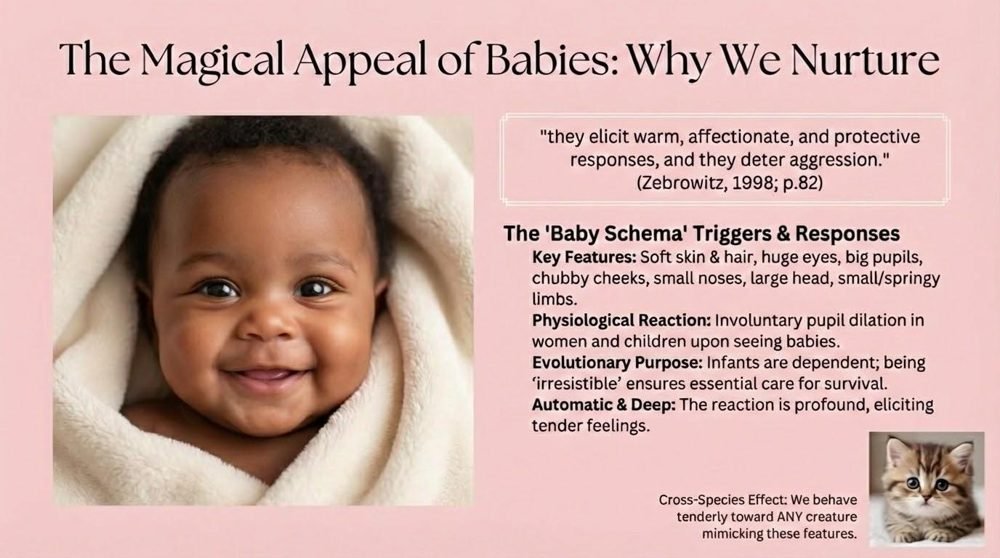
Attraction research usually focuses on mate choice, but the same evolutionary logic — a trait that recruits a behavioral response from others — shows up somewhere else entirely: caregiving. Konrad Lorenz proposed the baby schema (kindchenschema): a cluster of features — a large head relative to body, a high and prominent forehead, big eyes set low on the face, round cheeks, small nose and chin — that reliably triggers caregiving and protective responses in adult observers, not just toward human infants but toward anything that resembles them (which is a large part of why round-faced, big-eyed cartoon characters and animals strike people as "cute").
Bodhi says
Notice the pattern across this whole unit: an evolutionary account explains why a trait or preference might exist in general, but it almost never tells you what any specific person will do. Baby-schema cuteness doesn't mean every adult is compelled to caretake; mate-preference averages don't mean every man or woman fits the average. Evolutionary psychology is at its best explaining population-level tendencies — and at its weakest when it's stretched to explain individuals.
Attraction has ordinary causes, too
It's easy to leave a unit like this believing attraction is mostly about evolved cues to fitness. But some of the most reliable predictors of who we actually end up liking have nothing to do with ornaments or symmetry — they're mundane features of circumstance. Proximity is among the strongest: we tend to form relationships with the people we are simply near, because nearness manufactures repeated contact. That works largely through the mere-exposure effect — Zajonc's (1968) finding that repeated exposure to a stimulus, whether a face, a song, or a nonsense word, tends to increase our liking for it all on its own. Familiarity, quite literally, tends to breed fondness. Similarity is another: contrary to the "opposites attract" cliché, people are generally drawn to others who resemble them in attitudes, values, background, and even overall attractiveness level (the so-called matching pattern). None of this contradicts the evolutionary story; it sits alongside it, a reminder that any full account of human attraction has to include the situation, not just the genome.
The other lens: social-role theory
Not every psychologist agrees that mate-preference patterns reflect evolved mating psychology at all. Eagly and Wood's (1999) social-role (biosocial) theory offers a genuine alternative: many of the "sex differences" reported in mate-preference research, they argue, arise from the different social and economic roles men and women have historically occupied — roles shaped by division of labor, access to resources, and social structure — rather than from evolved psychological mechanisms specific to mating.
On this account, if women historically had less direct access to economic resources, valuing a partner's earning capacity would be a rational response to that structural position, not evidence of an evolved preference module. And the finding that mate-preference patterns shift as women's economic power increases (noted above with Buss's data) is exactly what social-role theory would predict.
◆ Two lenses, and the data rarely settle it cleanly
Evolutionary psychology and social-role theory aren't always mutually exclusive — evolved general-purpose learning mechanisms could operate through social roles, for instance — but they make different core claims about why mate-preference patterns exist, and the same cross-cultural correlational data get cited by both sides. This is normal science: competing theories, overlapping evidence, and no single study that cleanly adjudicates between them. Hold both explanations in mind rather than picking a side by instinct.
Check yourself
The one thing to carry out of this unit
Sexual selection gives you a real, well-supported explanation for why some traits exist that natural selection alone can't account for — and it genuinely illuminates parts of human attraction, jealousy, and even why we find round-faced things cute. But every specific claim in this literature — the mate-preference averages, the jealousy split, the beauty stereotypes — comes with caveats, competing explanations, or active scientific disagreement attached. The discipline of good evolutionary psychology isn't reciting the headline finding; it's holding the finding and its caveats in the same sentence.
References
Buss, D. M. (1989). Sex differences in human mate preferences: Evolutionary hypotheses tested in 37 cultures. Behavioral and Brain Sciences, 12(1), 1–49.
Buss, D. M. (2024). Evolutionary theories in psychology. In R. Biswas-Diener & E. Diener (Eds.), Noba textbook series: Psychology. DEF Publishers. http://noba.to/ymcbwrx4
Buss, D. M., Larsen, R. J., Westen, D., & Semmelroth, J. (1992). Sex differences in jealousy: Evolution, physiology, and psychology. Psychological Science, 3(4), 251–255.
Buss, D. M., & Schmitt, D. P. (1993). Sexual strategies theory: An evolutionary perspective on human mating. Psychological Review, 100(2), 204–232. https://doi.org/10.1037/0033-295X.100.2.204
DeSteno, D. A., & Salovey, P. (1996). Evolutionary origins of sex differences in jealousy? Questioning the "fitness" of the model. Psychological Science, 7(6), 367–372.
Dion, K., Berscheid, E., & Walster, E. (1972). What is beautiful is good. Journal of Personality and Social Psychology, 24(3), 285–290.
Eagly, A. H., & Wood, W. (1999). The origins of sex differences in human behavior: Evolved dispositions versus social roles. American Psychologist, 54(6), 408–423.
Fisher, R. A. (1930). The genetical theory of natural selection. Clarendon Press.
Franklin, R. G., Jr., & Zebrowitz, L. A. (2024). Attraction and beauty. In R. Biswas-Diener & E. Diener (Eds.), Noba textbook series: Psychology. DEF Publishers. http://noba.to/pwnj6da4
Haselton, M. G., & Buss, D. M. (2000). Error management theory: A new perspective on biases in cross-sex mind reading. Journal of Personality and Social Psychology, 78(1), 81–91. https://doi.org/10.1037/0022-3514.78.1.81
Langlois, J. H., Kalakanis, L., Rubenstein, A. J., Larson, A., Hallam, M., & Smoot, M. (2000). Maxims or myths of beauty? A meta-analytic and theoretical review. Psychological Bulletin, 126(3), 390–423.
Langlois, J. H., & Roggman, L. A. (1990). Attractive faces are only average. Psychological Science, 1(2), 115–121. https://doi.org/10.1111/j.1467-9280.1990.tb00079.x
Perilloux, C., Easton, J. A., & Buss, D. M. (2012). The misperception of sexual interest. Psychological Science, 23(2), 146–151. https://doi.org/10.1177/0956797611424162
Trivers, R. L. (1972). Parental investment and sexual selection. In B. Campbell (Ed.), Sexual selection and the descent of man, 1871–1971 (pp. 136–179). Aldine.
Walster, E., Aronson, V., Abrahams, D., & Rottman, L. (1966). Importance of physical attractiveness in dating behavior. Journal of Personality and Social Psychology, 4(5), 508–516. https://doi.org/10.1037/h0021188
Zahavi, A. (1975). Mate selection—A selection for a handicap. Journal of Theoretical Biology, 53(1), 205–214. https://doi.org/10.1016/0022-5193(75)90111-3
Zajonc, R. B. (1968). Attitudinal effects of mere exposure. Journal of Personality and Social Psychology, 9(2, Pt. 2), 1–27. https://doi.org/10.1037/h0025848
Zebrowitz, L. A., & Rhodes, G. (2004). Sensitivity to "bad genes" and the anomalous face overgeneralization effect: Cue validity, cue utilization, and accuracy in judging intelligence and health. Journal of Nonverbal Behavior, 28(3), 167–185. https://doi.org/10.1023/B:JONB.0000039648.30935.1b