Your textbook and lecture slides will give you the vocabulary of personality psychology — trait, self-concept, the Big Five — and move on. This page slows down on the part that usually gets compressed: how four genuinely different schools of thought tried to explain the same puzzle (why you act like "you" across time and situations), why one of them mostly lost the scientific argument, and why even the winning approach has a real, unresolved objection sitting inside it. None of this is required for the exam unless your instructor says so. It's here because the gaps are where the interesting questions live.
Four approaches, one question
Personality psychologists define personality as an individual's characteristic, relatively stable patterns of thinking, feeling, and behaving. That definition sounds tidy, but it hides a real disagreement about where those patterns come from — inside unconscious conflicts, inside a self trying to grow, inside measurable traits, or inside an ongoing loop between a person and their environment. Rather than one theory replacing the next, all four still show up in different corners of psychology today, so it's worth understanding what each one actually claims.
Step 1 · Psychodynamic
Freud and the neo-Freudians who followed him argued that personality is shaped by unconscious conflict — drives, fears, and childhood experiences pushing on behavior without a person's awareness. This tradition had enormous cultural and historical influence; it's the reason terms like "defense mechanism" and "unconscious motivation" are part of everyday language. Scientifically, though, it's the weakest of the four approaches: many of its core claims are difficult or impossible to test, since almost any behavior can be explained after the fact as evidence of some hidden conflict. What survives from this tradition isn't the specific mechanics Freud proposed — it's the broader, still-useful idea that not all of what shapes behavior is available to conscious reflection.
Step 2 · Humanistic
Rogers (1961) offered a very different picture: people are driven toward growth and self-actualization, not conflict management. Central to this view is the self-concept — your organized sense of who you are — and the idea that this self-concept develops best under unconditional positive regard, meaning acceptance that isn't contingent on performance or approval. When the regard a person receives is conditional instead, Rogers argued, people learn to distort or hide parts of themselves to stay accepted, which pulls the self-concept out of alignment with actual experience. Like the psychodynamic approach, humanistic theory is hard to test rigorously, but its emphasis on growth and unconditional positive regard shaped modern counseling and therapy practice.
Step 3 · Trait
The trait approach is the dominant model in personality science today, and its centerpiece is the Big Five (OCEAN): Openness, Conscientiousness, Extraversion, Agreeableness, and Neuroticism. Instead of proposing hidden conflicts or growth drives, trait theory simply asks where a person falls on each of these five broad dimensions — and it has held up well under scrutiny. McCrae and Costa (1987) found that the five-factor structure replicates across different measurement instruments and across different raters (self-report versus peer or observer ratings), which is exactly the kind of convergent evidence the psychodynamic and humanistic approaches generally lack.
Step 4 · Social-cognitive
Bandura (1986) proposed that personality doesn't live inside the person alone — it emerges from reciprocal determinism, a continuous three-way interaction between the person (their beliefs and expectations), their behavior, and their environment, each one shaping the other two over time. A person's belief in their own competence — self-efficacy — influences what situations they approach or avoid, which shapes what they practice and get feedback on, which in turn shapes future self-efficacy. This approach treats personality as dynamic and context-sensitive rather than fixed, which sets up the debate below.
Bodhi says
Don't try to rank these four as "right" and "wrong." Psychodynamic and humanistic theory are weak on testability, not necessarily wrong in every claim — they're just hard to falsify with data. Trait and social-cognitive approaches are where the modern science lives because they generate testable, replicable predictions.
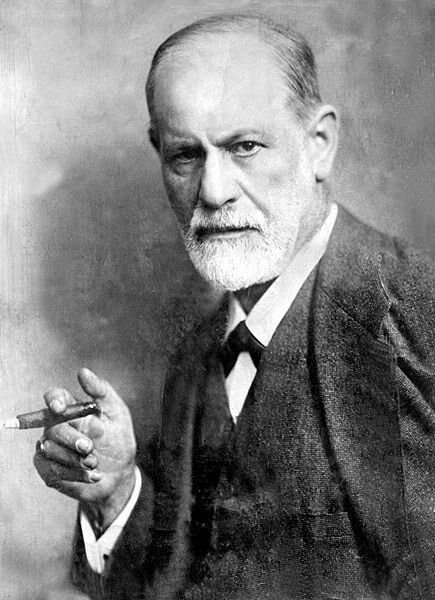

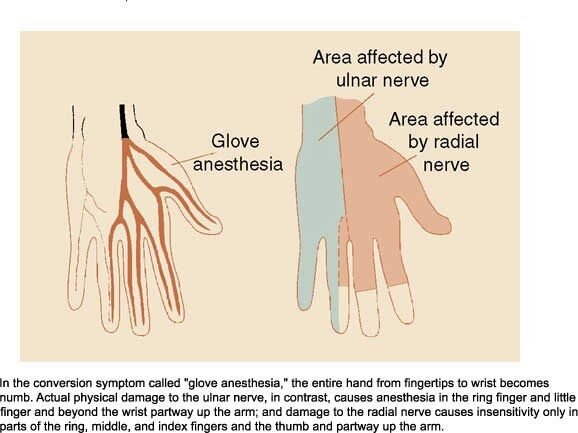
Because Freud's model still shapes everyday language, it's worth knowing its architecture even where the science hasn't held up. Freud (1923/1960) divided the mind into three systems in perpetual negotiation: the id, the reservoir of primitive drives running on the "pleasure principle" (satisfy the urge now); the superego, the internalized moral conscience pushing in the opposite direction; and the ego, the reality-based mediator trying to satisfy the id's demands in socially acceptable ways. When the resulting internal conflict produces anxiety, Freud argued, the ego deploys defense mechanisms — largely unconscious tactics for managing it. Repression pushes threatening thoughts out of awareness; denial refuses to acknowledge a painful reality; projection attributes one's own unacceptable impulses to someone else; rationalization invents a flattering reason for a behavior with a less flattering true cause. Modern psychology treats the elaborate structural model with heavy skepticism, but a diluted version of the defense-mechanism idea — that people unconsciously protect themselves from uncomfortable truths — has found support under other names in social and cognitive psychology.
The person-situation debate
◆ The challenge that reshaped the field
Mischel (1968) reviewed the evidence and pointed out something uncomfortable for trait theory: people's behavior is often far less consistent across different situations than trait labels imply. Someone who is "conscientious" at work might be disorganized at home; someone "extraverted" at a party might go quiet in a small group of strangers. If traits were supposed to predict behavior in any given moment, the data weren't cooperating.
The resolution that emerged wasn't to throw out trait theory — it was to be more precise about what traits actually predict. Traits are reliable predictors of a person's average tendency across many situations, aggregated over time, even though they are poor predictors of what that person will do in any single specific moment. A highly conscientious person won't be conscientious in literally every instance, but averaged across a semester, a job, or a year, their behavior will reliably differ from a less conscientious person's. Meanwhile, the situation itself carries real, independent weight in shaping any one moment of behavior — which is exactly the insight Bandura's social-cognitive model built into its core. Both are correct at the same time: the trait and the situation.
Do people change?
If traits are "relatively stable," does that mean your personality at 19 is your personality forever? Not exactly. Roberts, Walton, and Viechtbauer (2006) conducted a meta-analysis of longitudinal studies and found that Big Five traits shift in a predictable direction across adulthood: most people become more conscientious and more agreeable as they get older, a pattern researchers call the maturity principle. So stability and change aren't opposites here — traits are stable enough to meaningfully describe a person at any given time, while also gradually trending in a consistent direction across the lifespan. That combination — relative stability plus predictable, gradual change — is a more accurate summary than either "personality never changes" or "personality is constantly in flux."
Where do traits come from?
Trait science doesn't just describe personality dimensions — it asks what produces them, and a large part of the answer is biological. Behavior-genetic studies consistently estimate that roughly 40 to 60 percent of the variation in Big Five traits across a population is associated with genetic differences (recall the heritability discussion from the Genetics unit — this is a population statistic, not a claim about any one person). Hans Eysenck (1967) offered one of the first concrete biological accounts, proposing that extraversion reflects differences in baseline cortical arousal: introverts, on his theory, start from a higher baseline of arousal and so seek less external stimulation to stay comfortable, while extraverts, starting lower, seek out more stimulation and social contact to top themselves up. The specifics of Eysenck's arousal model have been refined and debated in the decades since, but the broader claim — that stable temperamental traits have identifiable biological underpinnings, not purely learned ones — has held up, and it connects personality back to the biological foundations from earlier units.
Measuring personality: two very different tools
Objective self-report inventories
Instruments like Big Five measures ask people to rate themselves on a standardized set of statements ("I see myself as someone who is talkative"). Scoring is fixed and consistent across every respondent, which is exactly what supports the strong reliability and cross-instrument validity McCrae and Costa (1987) documented. The obvious limitation is that these tools depend on a person's willingness and ability to self-report accurately.
Projective tests
Tests like the Rorschach inkblot test and the Thematic Apperception Test (TAT) ask people to respond to ambiguous stimuli — inkblots, vague scene images — on the theory that their unconscious personality will shape what they "see" or the stories they tell. This approach grew directly out of the psychodynamic tradition, and it shares the same core problem: scoring is far more subjective, and reliability (would two scorers agree?) and validity (does it actually predict what it claims to?) are weak compared to objective inventories.



◆ Why this matters beyond the classroom
Personality tests aren't just an academic exercise — they show up in hiring decisions, career counseling, therapy intake, and increasingly in consumer apps and social media quizzes. Knowing which tools have real psychometric backing, and which are popular despite weak evidence, is a practical skill, not just a test-taking one.
Myth: personality quizzes sort you into a type
The myth
Personality-type quizzes like the Myers-Briggs Type Indicator (MBTI) scientifically sort people into discrete, stable categories — you're an "INTJ" or an "ESFP," full stop, the way a blood test sorts you into a blood type.
What's actually true
The MBTI has weak psychometric support. Decades of trait research — the same tradition that validated the Big Five across instruments and observers (McCrae & Costa, 1987) — indicates that personality characteristics are continuous dimensions, not discrete either/or boxes; most people fall somewhere in the middle of any given dimension rather than clearly at one pole. On top of that, MBTI "type" classifications are notoriously unstable on retest: a substantial portion of people who retake the MBTI weeks later get sorted into a different type, which is a serious reliability problem for a tool marketed as identifying who you fundamentally are.
Check yourself
The one thing to carry out of this unit
Personality isn't one settled story — it's four different explanatory traditions, only some of which held up under rigorous testing, converging on the same basic finding: you have real, measurable, relatively stable tendencies, but those tendencies describe your average pattern across many situations and years, not a fixed label that predicts any single moment or locks you into a type. That distinction — average tendency versus rigid category — is the difference between good trait science and a quiz result.
References
Bandura, A. (1986). Social foundations of thought and action: A social cognitive theory. Prentice-Hall.
Eysenck, H. J. (1967). The biological basis of personality. Charles C. Thomas.
Freud, S. (1960). The ego and the id (J. Riviere, Trans.). Norton. (Original work published 1923)
McCrae, R. R., & Costa, P. T., Jr. (1987). Validation of the five-factor model of personality across instruments and observers. Journal of Personality and Social Psychology, 52(1), 81–90.
Mischel, W. (1968). Personality and assessment. Wiley.
Roberts, B. W., Walton, K. E., & Viechtbauer, W. (2006). Patterns of mean-level change in personality traits across the life course: A meta-analysis of longitudinal studies. Psychological Bulletin, 132(1), 1–25.
Rogers, C. R. (1961). On becoming a person: A therapist's view of psychotherapy. Houghton Mifflin.