Every rule in your IRB application form exists because someone, somewhere, got hurt before the rule was written. That is not a metaphor. Informed consent, debriefing, the whole apparatus of review boards and risk-benefit calculations — none of it was handed down as abstract good practice. It was assembled, piece by piece, in direct response to specific studies that went wrong. This page is about those studies, the principles that came out of them, and why "ethical" research means something more demanding than "the participant signed a form."
Morals versus ethics — a distinction worth keeping straight
Your slides probably use these words interchangeably, and in casual speech that is fine. But in a course on research methods, it helps to separate them. Morals are your own personal sense of right and wrong — the internal compass you'd apply whether or not anyone was watching. Ethics, in the professional sense used here, are agreed-upon standards that a community of practitioners writes down, teaches to its members, and enforces. A researcher can find something personally distasteful and still be operating within professional ethics; a researcher can also feel they've done nothing morally wrong and still be in clear violation of ethical codes. Research ethics are the second kind — codified, external, and enforced by institutions like IRBs and professional associations such as the American Psychological Association (APA, 2017).
◆ Why this distinction matters
IRBs don't ask "was the researcher a good person?" They ask "did this study follow the codified standards for protecting participants?" Those are different questions, and conflating them is a common source of confusion when students first encounter ethics review.
Tuskegee: the study that changed everything
Your lecture almost certainly named it. Here is the fuller shape of what happened, because the details are the point. Beginning in 1932, the U.S. Public Health Service enrolled roughly 400 Black men in Macon County, Alabama, who had syphilis, along with a comparison group who did not. The men were never told they had syphilis; they were told they were being treated for "bad blood," a vague local term covering various ailments. They were not treated. Researchers wanted to observe the untreated, natural course of the disease over time — and they let it run, tracking its progression through blindness, cardiovascular damage, neurological deterioration, and death (Jones, 1993).
The study did not stop when treatment became available. Penicillin was established as an effective cure for syphilis by the mid-1940s. The study continued anyway, for almost three more decades, until a journalist's reporting forced its end in 1972. Participants were deceived about their diagnosis, denied treatment that could have saved their health and in many cases their lives, and never gave anything resembling informed consent to any of it (Jones, 1993).
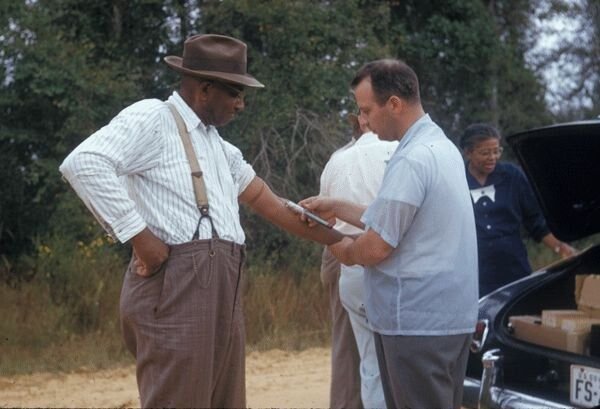
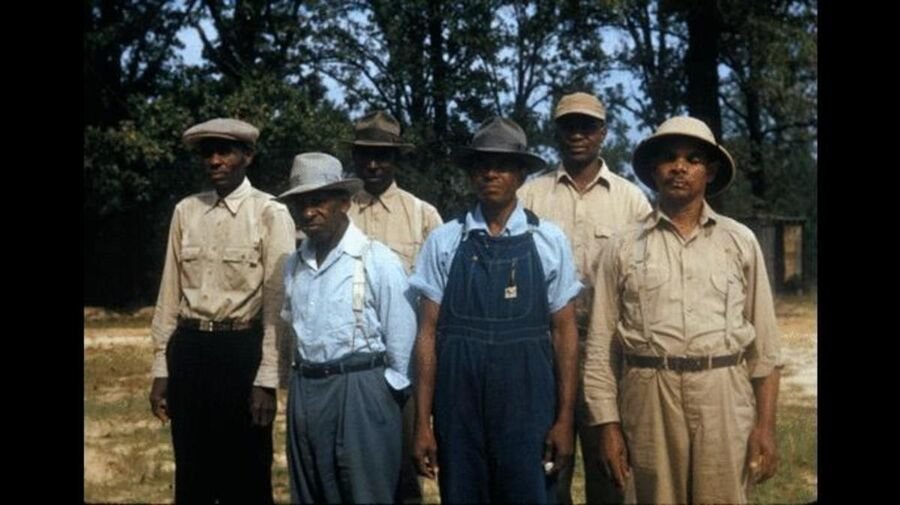
Tuskegee is not a cautionary tale from ancient history. It ran within living memory of people still alive today, and it is the direct reason the United States built its modern human-subjects protections — the Belmont Report, IRBs, and federal regulations on research with human participants all trace back to the public reckoning that followed its exposure. It is also a documented source of lasting mistrust of medical and research institutions among Black Americans, a legacy that shows up in public health research to this day. When you learn about informed consent later in this unit, keep this study in mind: consent forms exist because people were once denied the chance to consent at all.
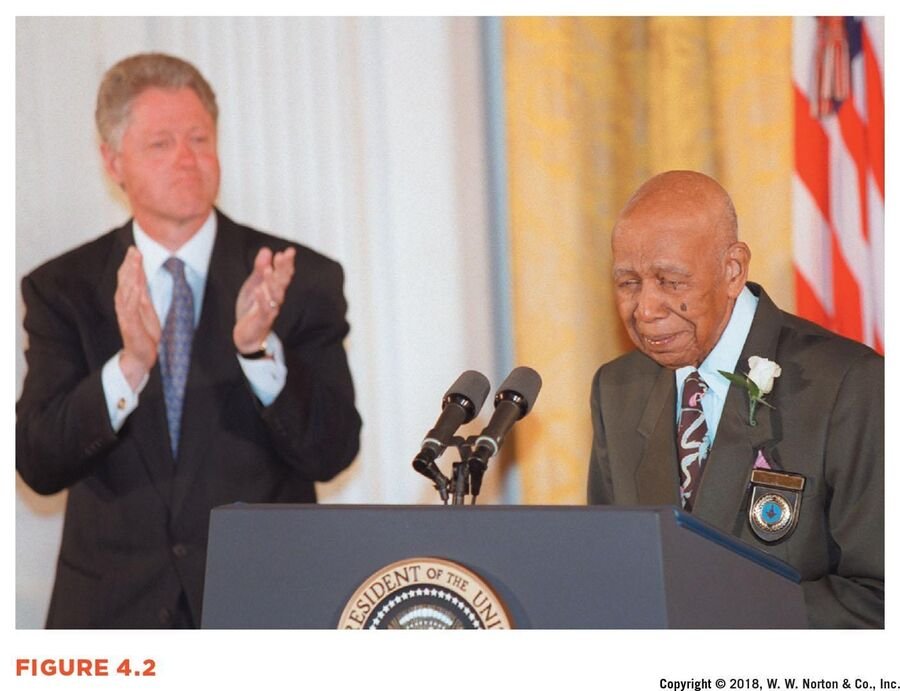
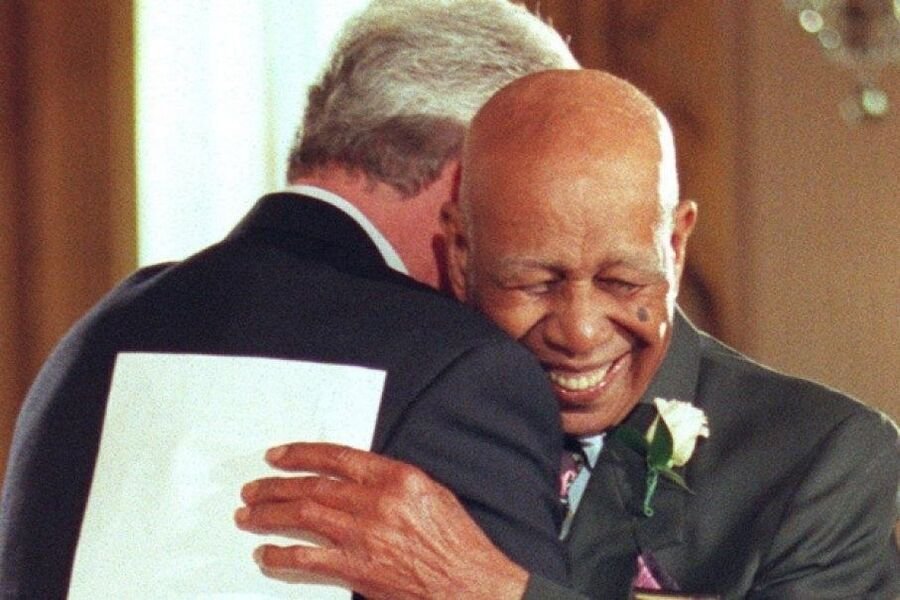
A few more specifics sharpen the picture. About 600 men enrolled in total — roughly 400 with syphilis and 200 without, serving as a comparison group — and they were recruited with free medical exams, hot meals, and burial insurance, which for poor sharecroppers in Depression-era Alabama was no small inducement (Jones, 1993). Because the men were never told their diagnosis, many unknowingly passed the disease to their wives, and some of their children were born with congenital syphilis; the harm did not stop at the men who signed up. Note, too, that the design was a quasi-experiment, not a true one — nobody was assigned to have syphilis — which means the study could not even deliver clean causal knowledge in exchange for the damage it did. The legal aftermath matters for the rest of this page: the outrage that followed the 1972 exposure produced the National Research Act of 1974, which created the national commission whose work became the Belmont Report and made review by an institutional review board a condition of federally funded research on human beings (National Research Act, 1974). The road from Macon County to the IRB form on your professor's desk is short and direct.
The international backdrop: Nuremberg and Helsinki
Tuskegee was not the first ethical failure to prompt a formal response. After World War II, the Nuremberg trials exposed the atrocities committed by Nazi physicians on concentration camp prisoners under the guise of medical research. In response, the Nuremberg Code (1947) established the first widely recognized international standard: that voluntary consent of the human subject is absolutely essential. The World Medical Association later built on this with the Declaration of Helsinki, an evolving set of ethical principles for medical research involving human subjects. These documents set the global stage on which the American reckoning with Tuskegee would later play out — the idea that consent and welfare must come before scientific curiosity was already on the books internationally well before the U.S. caught up domestically.
The Belmont Report and its three principles
In direct response to Tuskegee, a national commission was convened to work out a set of ethical principles for research involving human subjects. Their work is known as the Belmont Report, and it remains the foundational document for research ethics in the United States (National Commission for the Protection of Human Subjects of Biomedical and Behavioral Research, 1979). It organizes research ethics around three principles.
Step 1 · Respect for Persons
People are autonomous agents who have the right to decide, for themselves and with adequate information, whether to participate in research. This is where informed consent comes from. It also requires extra protections for people with diminished autonomy — children, people with cognitive impairments, and others who cannot fully consent on their own behalf.
Step 2 · Beneficence
Researchers must actively minimize possible harm and maximize possible benefit. This is not just "do no harm" — it requires a deliberate weighing of risks against benefits before a study ever begins, and ongoing attention to that balance while it runs.
Step 3 · Justice
The burdens and benefits of research should be distributed fairly. This principle exists largely because of Tuskegee: it is unjust when one group — often one that is already marginalized — bears the risks of research while other groups reap the medical benefits that result from it.
◆ A date worth getting right
Many lecture slides and textbooks date the Belmont principles to 1976, referring to the Belmont Conference Center meetings where the commission did its work. The document itself — the Belmont Report as published and formally adopted — did not appear until 1979 (National Commission for the Protection of Human Subjects of Biomedical and Behavioral Research, 1979). If you see 1976 in your notes, it is not wrong exactly, but 1979 is the citable publication date, and that is the year you should use if asked to cite the source.
Little Albert: psychology harming its own subject
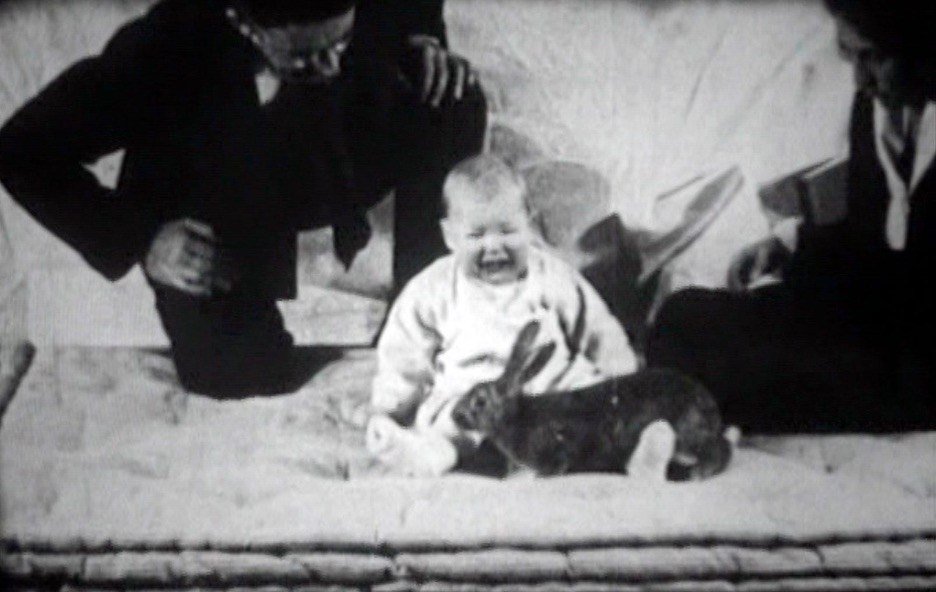
Long before Milgram, psychology produced its own cautionary tale. In 1920, John B. Watson and his graduate student Rosalie Rayner set out to show that fear could be conditioned in a human being much as Pavlov had conditioned salivation in dogs. Their subject was an infant known in the literature as "Little Albert," roughly nine months old at the start. The researchers first presented Albert with a white rat, which did not frighten him, and then began pairing the rat with the sudden, jarring clang of a steel bar struck behind his head. After several pairings, the sight of the rat alone made Albert cry and try to crawl away, and the fear generalized to other furry white things — a rabbit, a dog, a fur coat, even a Santa Claus mask (Watson & Rayner, 1920).
By any modern standard the study is indefensible: it deliberately induced distress in an infant who could not consent, made no attempt to weigh harm against benefit, and — crucially — Albert was removed from the setting before the conditioned fear was ever undone, so whatever had been instilled was simply left in place. Watson and Rayner even joked in their published report about the Freudian complexes some future analyst might read into Albert's fears, a casualness that reads today as chilling. The study is a clean illustration of a principle this unit keeps returning to: "it produced real scientific knowledge" is never, by itself, an ethical defense. The knowledge was real; the study would never be approved now.
Milgram: what deception can teach, and what it costs
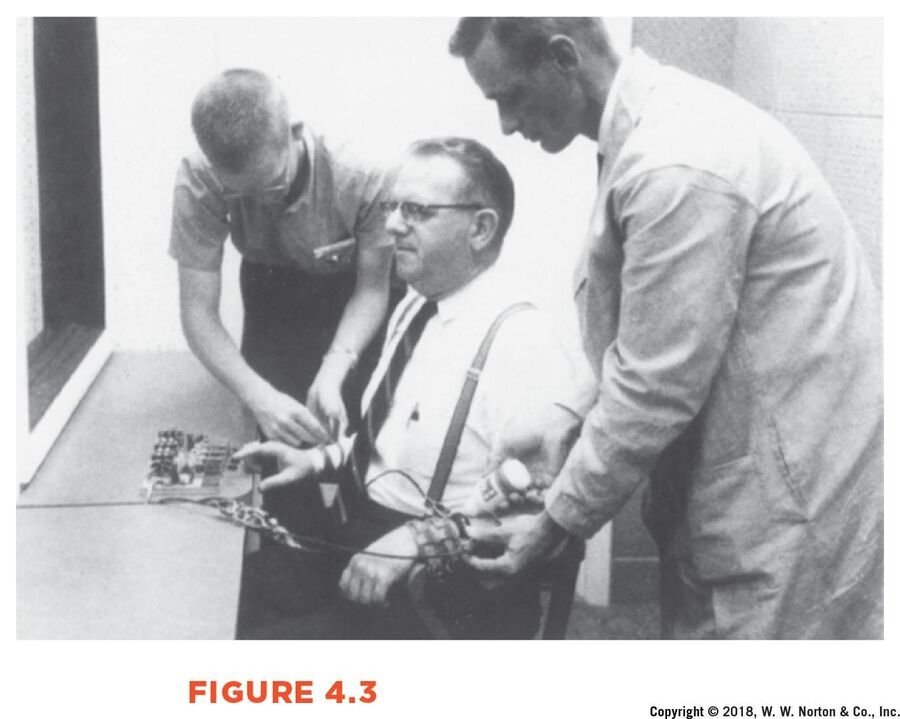
Stanley Milgram's obedience studies (1963) are probably the most famous in all of psychology, and your slides likely covered the setup: participants were told they were assisting in a study of learning and were instructed by an experimenter to deliver increasingly severe electric shocks to another "participant" — actually a confederate — whenever that person answered a memory question incorrectly. No real shocks were delivered, but participants believed they were, and a striking number continued to the maximum voltage simply because an authority figure told them to continue.
The finding is genuinely important. It demonstrated, empirically and uncomfortably, how far ordinary people will go in obeying authority even when it conflicts with their own conscience — a question that mattered enormously in a world still processing the atrocities of the recent war. That is the value side of the ledger.
The cost side is why Milgram's work became a flashpoint in the history of research ethics. Participants were deceived about the basic nature of the study. Many experienced real, visible distress during the procedure — sweating, trembling, nervous laughter, some to the point of visible anguish — believing they might be seriously harming another person. Critics argued that even with debriefing afterward, the psychological toll during the study itself was a cost researchers had no right to impose without genuinely informed consent. Milgram's studies are taught for both reasons at once: they are a landmark finding about obedience and a landmark case study in why deception research demands careful ethical scrutiny (Milgram, 1963).
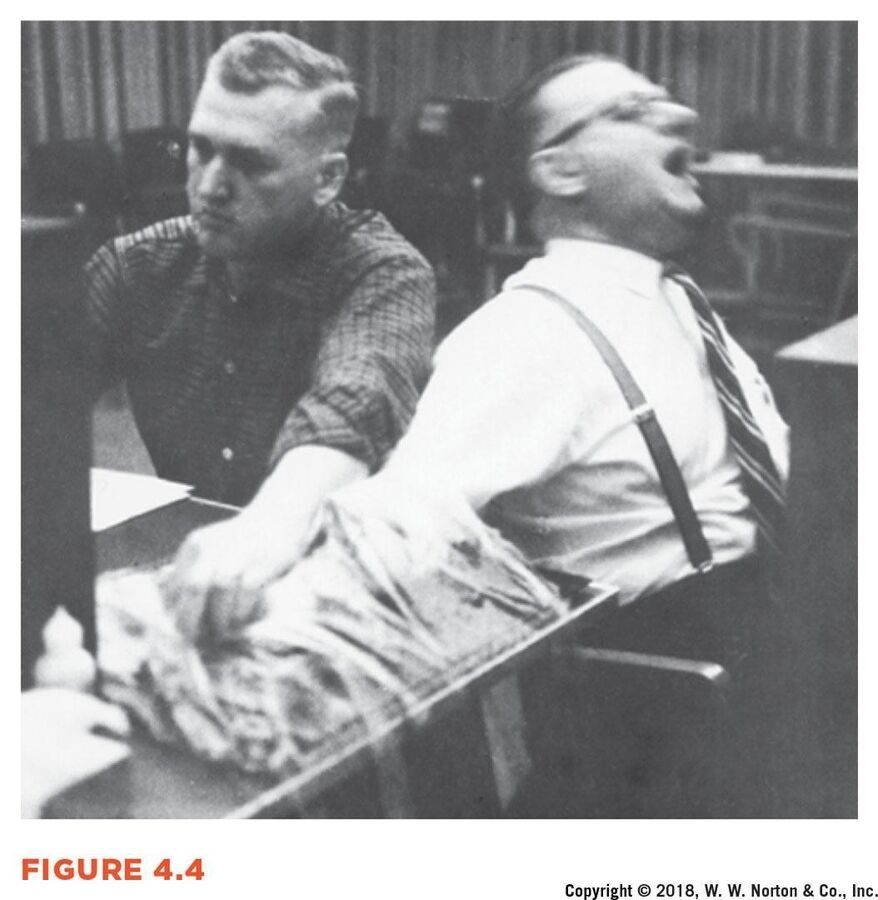
The Milgram story has itself been reexamined in recent years, in ways that cut in both directions. On the empirical side, Jerry Burger (2009) ran a careful partial replication under modern ethical constraints — stopping at the 150-volt point, where Milgram's original data showed the decisive break, and screening out potentially vulnerable participants beforehand — and still found obedience rates only slightly below Milgram's, suggesting the basic phenomenon was not merely an artifact of its era. On the critical side, historian Gina Perry's (2013) work in Milgram's own archives complicated the tidy textbook version: some participants were not debriefed promptly or fully, a number clearly suspected the shocks were fake (which would inflate the apparent rate of "obedience"), and the experimenter frequently improvised pressure well beyond the four standardized prods the method described. Neither strand erases the finding, but together they model exactly the skeptical, evidence-checking posture this course is trying to build — take the landmark seriously, and still read the fine print.
The Stanford Prison Experiment: the story you were told, and the update
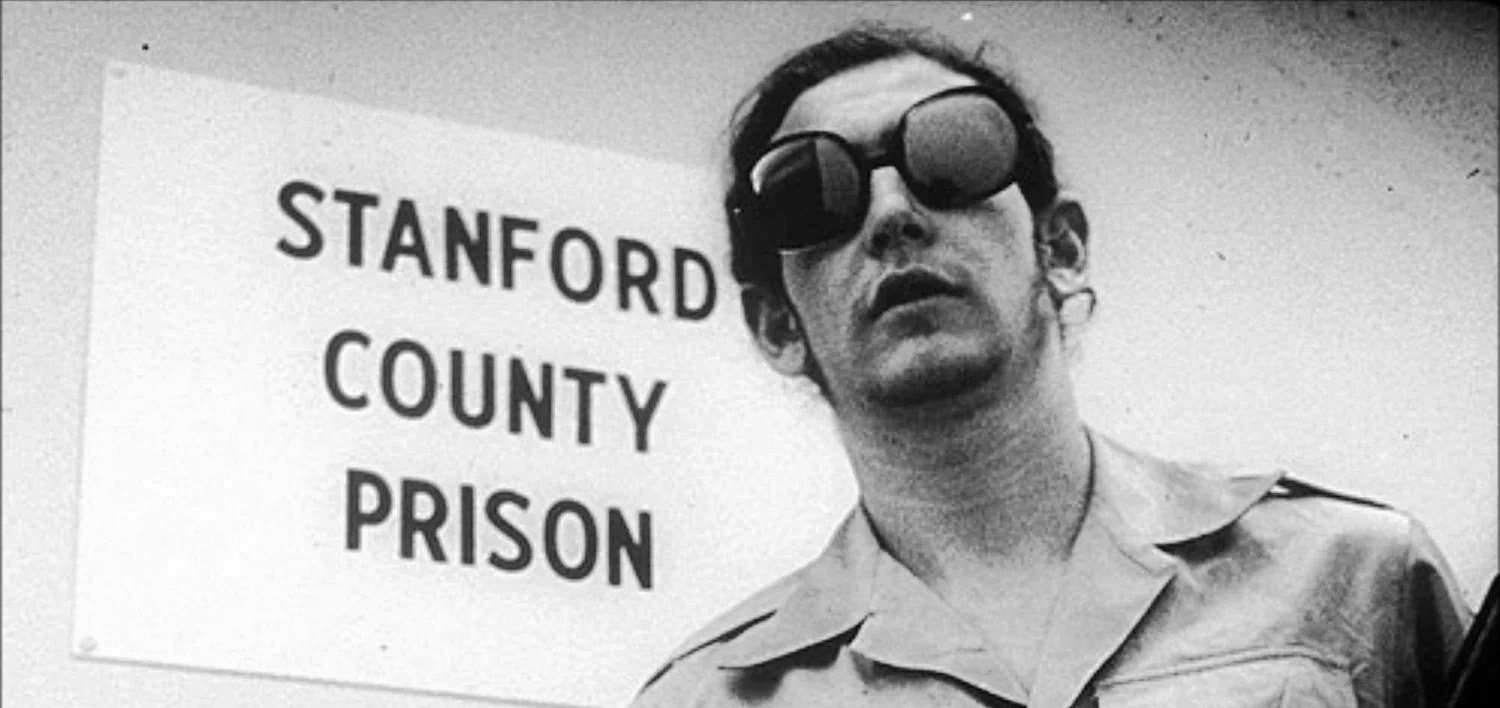
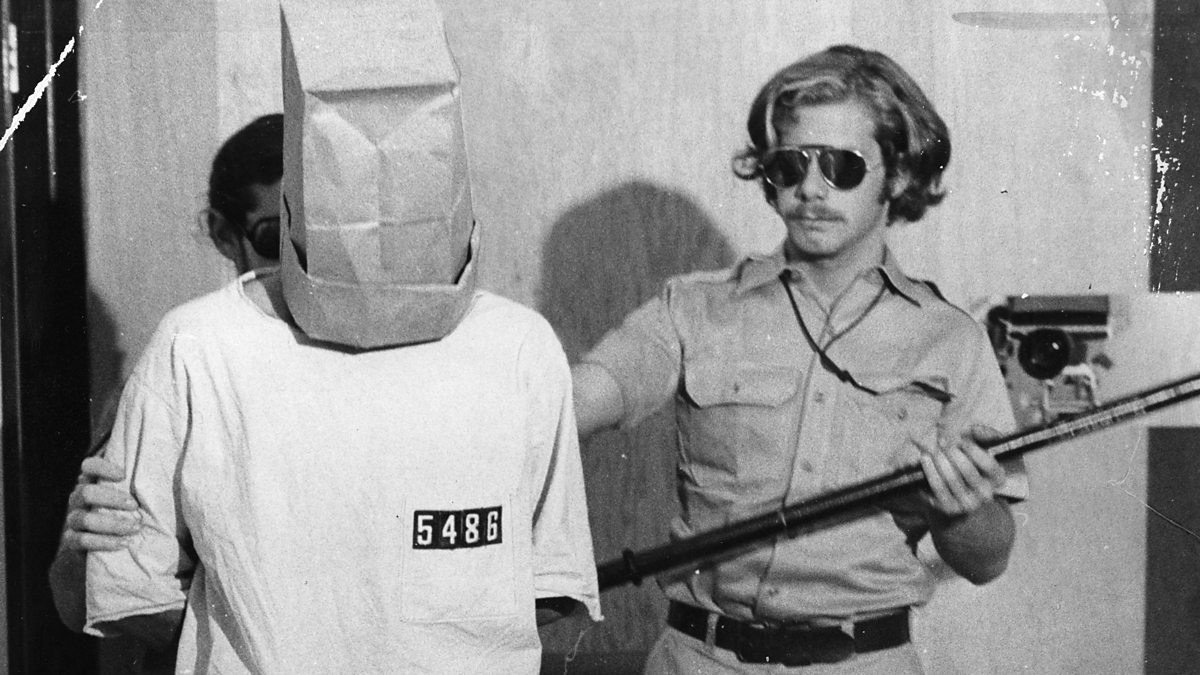
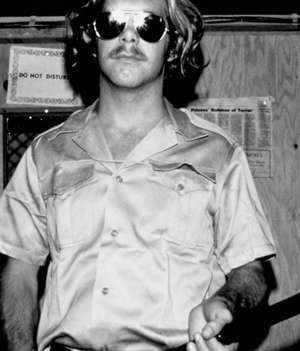
Here is the version of the Stanford Prison Experiment that has circulated for decades. In 1971, researchers randomly assigned college students to role-play "guards" or "prisoners" in a mock prison built in the basement of a Stanford building. Within days, the study reported, the guards had spontaneously become cruel and authoritarian and the prisoners showed signs of real psychological breakdown — so much so that the planned two-week study was halted after six days (Haney, Banks, & Zimbardo, 1973). The lesson drawn from it was that situational roles, not individual personality, can transform ordinary people into oppressors almost automatically.
The myth
The Stanford Prison Experiment shows that simply assigning people the role of "guard" causes spontaneous, uncoached cruelty — proof that situations alone can turn anyone into an abuser.
What's actually true
Later investigation, including access to archived recordings and interviews, found that guards were actively coached by the research team to behave harshly, and at least one dramatic "breakdown" was reportedly performed by a participant who said he was acting. The "spontaneous" narrative that made the study famous appears to have been substantially overstated (Le Texier, 2019).
◆ Why this update matters more than the original finding
Thibault Le Texier's (2019) reexamination of the Stanford Prison Experiment is not just a correction to one famous study — it is a lesson in scientific skepticism itself. A study can dominate psychology textbooks for fifty years, shape how millions of students think about human nature, and still turn out to rest on a badly incomplete account of what actually happened. Being taught this study should make you more careful, not less, about accepting dramatic findings at face value — including the findings in this very course.
- 1947 Nuremberg Code — the first international code of research ethics, written in the wake of Nazi medical atrocities; it establishes voluntary consent as essential.
- 1963 Milgram's obedience study — its use of deception and the distress it caused participants helped ignite the modern debate over how research should treat people.
- 1971 Stanford Prison Experiment — another lightning rod for concerns about psychological harm and researcher control (and later, about how faithfully such studies are reported).
- 1972 Tuskegee study exposed — press revelations of the 40-year syphilis study end it and shock the public, forcing federal action.
- 1979 Belmont Report published — the commission convened after Tuskegee lays out the three principles that still govern research today.
The rules governing research ethics today were built in direct response to this specific sequence of events, not designed in the abstract.
The machinery: how ethics actually gets enforced
Principles are only as good as the systems that apply them. In practice, ethical oversight of psychological research runs through a specific set of mechanisms.
The Institutional Review Board, or IRB, is the committee at a university or research institution that reviews proposed studies before they can begin. An IRB weighs exactly the kind of risk-benefit and justice questions the Belmont Report describes, and it has the authority to reject or require changes to a study design — including yours, if you ever propose original research as an undergraduate.
Who sits on that committee is part of the design. An IRB is deliberately mixed: scientists who can judge the methods, members of the institution's administration, and — by requirement — community members with no stake in the research, whose job is to ask the questions a researcher might not think to ask. Any institution that receives federal research funding must have access to one, which in practice means every university in the country. The consent form the IRB approves also carries a guarantee that is easy to skim past: the data will be kept confidential. And when participants are under 18, the signature has to come from a parent or legal guardian, with the child's own agreement — called assent — sought on top of it wherever the child is old enough to give it.
Not every study gets the same level of scrutiny. IRBs sort proposals by how much risk they carry. Studies that pose no more than the risks of ordinary daily life — an anonymous survey on an innocuous topic, say — may qualify for exempt or expedited review, a lighter and faster process. Studies involving deception, vulnerable populations, sensitive data, or anything beyond minimal risk get full board review, in which the whole committee scrutinizes the protocol. "Minimal risk" is the governing yardstick running through all of this: the notion that the probability and magnitude of harm in a study should be no greater than what participants routinely encounter in daily life. The moment a study exceeds that bar, the researcher's burden to justify it — and to build in protections — rises sharply.
Voluntary informed consent means participants agree to take part with a genuine understanding of what the study involves, free of coercion, and with the right to withdraw at any time without penalty. The APA's Ethical Principles of Psychologists and Code of Conduct spells this out formally in Standard 8.02, which requires researchers to inform participants about the purpose, procedures, risks, and their right to decline or withdraw (APA, 2017).
Deception is sometimes permitted, but only under narrow conditions: when the scientific value of the study justifies it, when no equally effective non-deceptive alternative exists, and when the deception will not cause participants significant distress. Even then, deception triggers an additional obligation — debriefing. After the study, researchers must explain what was actually being studied, correct any false impressions the deception created, and give participants the chance to ask questions or withdraw their data.
Coercion is any pressure, explicit or implicit, that makes it hard for someone to genuinely decline to participate — a professor offering extra credit only for study participation with no equivalent alternative assignment is a classic gray-area example students often don't recognize. Vulnerable or special populations — children, prisoners, people with cognitive impairments, and others with reduced capacity to consent freely — require additional protections beyond the standard consent process. Confidentiality obligates researchers to protect participants' identities and data. And animal research ethics, though a separate framework from human-subjects protections, follows its own principles of minimizing harm and justifying the necessity of any procedure used.
That animal framework deserves its own paragraph, because a good deal of psychology's foundational work — Pavlov's dogs, Skinner's rats and pigeons, Tolman's mazes — was done on animals, and still is. Rodents and birds account for about 90% of the animals in psychological research (Spielman et al., 2020); they are used precisely because many basic processes are similar enough to ours to stand in for studies that would be unethical to run on people. That is a reason for extra care, not less. Researchers must design animal studies to minimize pain and distress, and the proposals go not to an IRB but to an Institutional Animal Care and Use Committee (IACUC) — administrators, scientists, a veterinarian, and community members — which must approve every protocol before it begins and inspects the animal facilities twice a year to confirm that what was approved is what is being done. The structural parallel with the IRB is the point: both exist because "the science justified it" turned out, historically, to be a sentence people could say about almost anything.
The myth
If participants sign a consent form, the study is ethical.
What's actually true
Consent is necessary but not sufficient. An IRB still has to weigh risk against benefit, evaluate whether any deception is justified and minimal, check for coercion in how participants were recruited, and consider whether the burdens of the study are being distributed justly. A signature on a form doesn't resolve any of those questions on its own — it only satisfies the Respect for Persons piece of a three-part framework.
Genuine consent
A student sees a flyer for a study, reads a consent form describing the procedure and risks, and freely chooses to sign up — with a real, no-penalty alternative available if they decline.
Coercion dressed as consent
A professor tells a class that participating in their own study is the only way to earn a required participation credit, with no comparable alternative offered. The form gets signed, but the choice was never really free.
Bodhi says
When you're deciding whether a scenario counts as coercion, ask the "real alternative" question: is there a genuinely equivalent way to opt out with no cost? If the honest answer is no, consent isn't really voluntary — no matter what the signed form says.
The unresolved problem: can we use knowledge gained unethically?
Not every ethical question in this unit has a tidy answer, and this is the one worth sitting with rather than resolving too quickly. Laud Humphreys' Tearoom Trade (1970) studied men who engaged in anonymous sex with other men in public restrooms, a stigmatized and, at the time, often criminalized behavior. Humphreys served as a lookout for the encounters he observed, then covertly recorded participants' license plate numbers, traced them to their home addresses through motor vehicle records, and later visited them at home under a different pretext to interview them about their lives — all without their knowledge or consent that they were subjects of research (Humphreys, 1970).
◆ A question this page won't answer for you
Tearoom Trade produced real, valuable sociological knowledge about a hidden and stigmatized population at a time when almost nothing was known about it. It also involved a severe breach of privacy and consent by any modern standard. So: if valuable knowledge is produced by unethical means, is it acceptable to cite it, teach it, and build on it? Does using the findings implicitly endorse how they were obtained? Reasonable people in this field disagree, and your instructor may have opinions worth hearing in lecture — but there is no single settled answer, and you should be suspicious of anyone who offers you one too confidently.
Check yourself
The one thing to carry out of this unit
Every safeguard in a modern IRB application — the consent form, the debriefing script, the risk-benefit table, the justice check on who's being recruited — is a direct answer to something that once went wrong on a real person. Tuskegee, Milgram, the Stanford Prison Experiment, and Tearoom Trade are not just names to memorize for an exam; they are the reason the rules exist at all. When a rule feels like bureaucratic friction, it's worth asking what it was written to prevent. Usually, the answer is a person.
References
American Psychological Association. (2017). Ethical principles of psychologists and code of conduct (2002, amended effective January 1, 2017).
Burger, J. M. (2009). Replicating Milgram: Would people still obey today? American Psychologist, 64(1), 1–11. https://doi.org/10.1037/a0010932
Haney, C., Banks, C., & Zimbardo, P. (1973). Interpersonal dynamics in a simulated prison. International Journal of Criminology and Penology, 1(1), 69–97.
Humphreys, L. (1970). Tearoom trade: Impersonal sex in public places. Aldine.
Jones, J. H. (1993). Bad blood: The Tuskegee syphilis experiment (Rev. ed.). Free Press.
Le Texier, T. (2019). Debunking the Stanford Prison Experiment. American Psychologist, 74(7), 823–839.
Milgram, S. (1963). Behavioral study of obedience. Journal of Abnormal and Social Psychology, 67(4), 371–378.
National Commission for the Protection of Human Subjects of Biomedical and Behavioral Research. (1979). The Belmont report: Ethical principles and guidelines for the protection of human subjects of research. U.S. Department of Health, Education, and Welfare.
National Research Act of 1974, Pub. L. No. 93-348, 88 Stat. 342 (1974).
Perry, G. (2013). Behind the shock machine: The untold story of the notorious Milgram psychology experiments. The New Press.
Spielman, R. M., Jenkins, W. J., & Lovett, M. D. (2020). Psychology 2e. OpenStax. https://openstax.org/details/books/psychology-2e
Watson, J. B., & Rayner, R. (1920). Conditioned emotional reactions. Journal of Experimental Psychology, 3(1), 1–14. https://doi.org/10.1037/h0069608