Every species we have ever studied sleeps. Jellyfish with no brain at all show a sleep-like state (Nath et al., 2017). Sleep is older than the Cambrian explosion, older than eyes, older than spines, and yet humans are the only animal that deliberately deprives itself of it. This reading covers why we sleep, what the two clocks are doing, what a night is built out of, why teenagers are biologically shortchanged, what deprivation costs, how to sleep better, what sleeping next to someone does to your night, and what happens when sleep goes wrong.
Why we sleep
Three facts frame everything that follows. First, sleep is universal and ancient: every animal examined, from insects to whales, shows a daily period of reduced responsiveness that is rapidly reversible and that the animal "makes up" when deprived (Nath et al., 2017; Walker, 2017). Second, humans carry an evolutionary predisposition toward roughly eight hours of sleep in each 24-hour cycle; the National Sleep Foundation's expert panel puts the healthy adult range at seven to nine hours, with eight to ten for teenagers (Hirshkowitz et al., 2015). Third, we are the only species that voluntarily cuts its own sleep short, and the consequences of that choice run through every section below.
A useful frame for the whole unit: sleep is not the brain switching off. It is the night shift. The brain is metabolically active all night, running processes it cannot run while you are awake and paying attention to the world, and those processes turn out to include memory consolidation, waste clearance, emotional regulation, and immune maintenance.
Some things to consider about sleep
The psychiatric point deserves a second look because it is easy to read backwards. For decades, poor sleep was treated as a symptom of depression, anxiety, or psychosis: fix the disorder and the sleep will follow. The OASIS trial reversed the arrow. Freeman et al. (2017) randomized more than 3,700 university students with insomnia to digital cognitive behavioral therapy for insomnia or to usual care, and treating the insomnia reduced paranoia and hallucinations, as well as depression and anxiety, over the following weeks. Sleep is not just a readout of mental health. It is a lever on it.
The immune point is equally concrete. Prather et al. (2015) measured sleep in healthy adults for a week with wrist actigraphy, then quarantined them in a hotel and sprayed a live rhinovirus into their noses. Those who had slept fewer than six hours a night were roughly four times more likely to develop a cold than those who had slept seven or more. Chronic short sleep shifts the immune system toward inflammation and away from the antiviral and tumor-surveillance functions that protect you (Irwin, 2015).
Let that sink in
Vehicle crashes caused by drowsy drivers are a public-health problem on the scale of drunk driving (Tefft, 2012). Staying awake for about 19 hours produces cognitive and motor impairment equivalent to a blood-alcohol level at the legal limit (Williamson & Feyer, 2000).
There is a disease that stops you from sleeping, and within about a year and a half of onset it kills you: fatal familial insomnia (Lugaresi et al., 1986). It is discussed in the disorders section below.
The Guinness Book of World Records stopped recognizing the record for longest time without sleep because the attempt is too dangerous — while continuing to certify categories such as catching spears underwater, juggling chainsaws, and running obstacle courses while on fire.
The longest anyone has gone without sleep
In 1964, a 17-year-old San Diego high school student named Randy Gardner stayed awake for 264.4 hours — eleven days and 25 minutes — for a science-fair project, breaking the previous mark of 260 hours held by Tom Rounds. Stanford sleep researcher William Dement observed the final days, and the case was written up in the psychiatric literature (Gulevich et al., 1966). Under scrutiny, Gardner's "wakefulness" turned out to be porous: EEG recordings showed microsleeps, moments in which parts of the brain briefly dropped into sleep while he appeared to be awake, and by the end he showed mood swings, memory lapses, and paranoid thinking. When he finally slept, he slept about 14 hours, woke feeling more or less normal, and recovered without lasting damage — although in later life he reported decades of insomnia and has said he was "awful to be around" during the attempt.
The current, and probably permanent, record belongs to Robert McDonald, who in 1986 stayed awake 453 hours and 40 minutes — 18 days, 21 hours, and 40 minutes. Shortly afterward Guinness stopped monitoring the category because of the dangers involved, and no one is known to have broken it since. The animal literature explains why the category was retired: rats kept continuously awake in Rechtschaffen's classic experiments lost weight while eating more, lost the ability to regulate body temperature, developed skin lesions, and died within two to three weeks (Rechtschaffen et al., 1983). Total sleep deprivation is lethal in every mammal in which it has been tested to that endpoint.
Daylight saving time: even one hour matters
If you want evidence that small amounts of sleep loss matter, look at what happens to a whole population when the clocks move. Sandhu et al. (2014) examined every hospital admission for heart attack in Michigan across four years and found a 24% increase on the Monday after the spring shift, when everyone loses an hour of sleep opportunity, and a 21% decrease on the Tuesday after the fall shift, when everyone gains one. The total number of heart attacks across the week did not change — the events were pulled forward or pushed back — which tells you that a single hour of lost sleep is enough to tip vulnerable people over the edge a few days early. We are not evolutionarily predisposed to be sleep deprived.
Circadian rhythm: the body's 24-hour clock
Whether you feel sleepy at any given moment depends on two separate systems running at the same time. The first is your circadian rhythm: a roughly 24-hour cycle generated by a cluster of about 20,000 neurons in the hypothalamus called the suprachiasmatic nucleus (SCN). The SCN is your internal timer, honed by natural selection to align sleep and wakefulness with the day–night cycle. It drives daily rhythms in body temperature, cortisol, alertness, and the pineal gland's release of melatonin, the hormone that signals "it is night" to the rest of the body.
The clock is not exactly 24 hours. Left to run without time cues, the human rhythm free-runs at a little over 24 hours — on average about 24 hours and 11 to 15 minutes in the most careful measurements (Czeisler et al., 1999). That is why morning light matters. Light striking the retina reaches the SCN through a dedicated pathway, and the light–dark cycle methodically resets the clock each day, "winding" a slightly-too-long timer back to a precise 24 hours. Without daily calibration by light, your internal day would drift later and later.
The science of jet lag
The clearest way to feel your clock is to fight it. Jet lag is what happens when you cross time zones faster than the SCN can re-entrain: your clock is still signaling 3 a.m. while the local sun says lunchtime, and the mismatch between internal and external time produces fatigue, fog, irritability, digestive upset, and nights spent staring at the ceiling. The clock resets slowly, on the order of an hour a day, so a six-zone trip means roughly a week of partial misalignment.
Direction matters. Eastward travel (New York to Paris) is harder, because it forces you to fall asleep earlier than your body wants — you have to shrink your day, which fights the clock's natural tendency to run slightly long. Westward travel is easier, because staying up later stretches the day in the direction your slightly-longer-than-24-hour clock already leans. The same asymmetry is why "fall back" in November feels tolerable and "spring forward" in March feels like a small assault.
Sleep pressure … "I feel sleepy"
The second system is sleep pressure, and it has nothing to do with the time of day. From the moment you wake, a chemical byproduct of neural activity called adenosine accumulates in the brain, and the longer you have been awake, the more of it there is. Rising adenosine is experienced as mounting sleepiness; during sleep it is cleared, and the pressure resets. Together, the circadian clock and the adenosine drive form the two-process model of sleep regulation (Borbély et al., 2016): the clock says when in the day sleep should happen, and the pressure says how badly you need it right now.
The caffeine effect
Caffeine does not add energy. It works by battling adenosine for the privilege of latching onto adenosine receptors in the brain, and when caffeine occupies the receptor, the brain cannot "read" how much sleep pressure has actually built up. The adenosine is still there; you have muted the alarm. When the caffeine clears, the accumulated pressure lands all at once — the afternoon crash (Walker, 2017).
The number to remember is the half-life: it takes roughly five to seven hours to clear half of a dose. So half of a 4 p.m. coffee is still circulating at 10 p.m., and a quarter of it at 4 a.m. You may fall asleep anyway, but with receptors still partly blocked you spend less of the night in deep sleep and wake less restored.
Check yourself: caffeine keeps you alert mainly by acting on which process?
The great sleep shift: from biphasic to monophasic
Modern sleep — one consolidated block of seven to nine hours, roughly 11 p.m. to 7 a.m. — is historically unusual. Historian A. Roger Ekirch combed diaries, court records, medical texts, and literature from pre-industrial Europe and found consistent references to a "first sleep" and a "second sleep" (Ekirch, 2001). People typically went to bed around 8 or 9 p.m., slept about four hours, woke for an hour or two around midnight — to read, pray, talk, tend fires, have sex, or simply lie quietly — and then slept a second stretch until dawn. This biphasic pattern was so ordinary that the waking interval had its own name in several languages. It disappeared over the nineteenth century as artificial lighting, first gas and then electric, extended the evening, pushed activity into the night, and compressed rest into a single monophasic block driven by factory and office schedules. The ubiquity of electric light did not just let us stay up later; it fundamentally reorganized human sleep.
The power of the siesta
There is a second piece of biology in the old pattern. Even well-rested people show a dip in alertness in the early afternoon, roughly 1 to 3 p.m. — the post-prandial dip, so called because it follows lunch, although it is driven mostly by the circadian clock rather than by digestion. Cultures that built an afternoon nap into the day were working with this rhythm rather than against it.
What happens when a culture phases the siesta out? Naska et al. (2007) followed more than 23,000 Greek adults for six years. Those who took a regular midday nap of about 30 minutes had a 37% lower risk of dying from coronary heart disease than those who did not, after adjusting for diet, activity, and other risk factors; the association was strongest among working men, for whom the nap plausibly relieves daytime stress. The often-repeated claim that residents of the Greek island of Ikaria are several times more likely than Americans to reach 90 comes from popular "Blue Zones" reporting rather than a controlled study, but it points in the same direction: napping cultures are not lazy cultures. They are following an evolutionary program the rest of us have overridden.
The human sleep paradox: shorter duration, higher REM
Compared with our closest relatives, human sleep is odd. Chimpanzees, gorillas, and lemurs sleep roughly 10 to 15 hours a day; humans average closer to 7, less than any other primate and far less than body size and brain size would predict (Nunn & Samson, 2018). Yet we spend a disproportionate share of that shorter night — about 20 to 25% — in REM sleep, the dreaming stage, compared with perhaps 5 to 10% in most other primates. Nunn and Samson's comparative analysis argues that humans evolved shorter but more efficient, REM-dense sleep, probably as our ancestors moved from sleeping in trees to sleeping on the ground around fires, in groups, exposed to predators, where long unconsciousness was costly and the cognitive payoffs of REM were high. We traded quantity for a denser dose of the stage that does the most for memory integration and emotional processing.
Sleep and Alzheimer's disease: amyloid beta and tau
Every neuron produces waste. One waste product is amyloid beta, a fragment cleaved from a larger protein (APP) that in a healthy brain is cleared away. In Alzheimer's disease, amyloid beta accumulates outside neurons into sticky plaques, while inside neurons a second protein, tau, which normally stabilizes the cell's internal transport scaffolding, tangles into neurofibrillary knots. Plaques and tangles together disrupt communication and transport, kill neurons, and produce the progressive cognitive decline that defines the disease.
Where does sleep come in? Xie et al. (2013) showed in mice that during sleep the space between brain cells expands by about 60%, and cerebrospinal fluid flushes through the tissue along the blood vessels — a "glymphatic" system that clears metabolic waste, including amyloid beta, roughly twice as fast during sleep as during waking. The brain takes out the trash at night. In humans, a single night of total sleep deprivation measurably increases amyloid beta in the hippocampus and thalamus on PET scans (Shokri-Kojori et al., 2018). The relationship runs both ways — Alzheimer's damages the sleep-regulating regions, which worsens sleep, which slows clearance — but the implication for a 20-year-old is direct: chronic short sleep in early adulthood is not a neutral choice for the brain you will have at 70.
Two types of sleep
Sleep is not one state. It divides into NREM (non-rapid eye movement) sleep and REM (rapid eye movement) sleep, and the two do different jobs. Tononi and Cirelli's (2014) synaptic homeostasis hypothesis holds that waking learning strengthens synapses across the brain, and that deep NREM sleep downscales them — weakening or pruning connections that were not reinforced, so the important ones stand out and the brain has capacity to learn again tomorrow. In shorthand, NREM removes unnecessary connections. REM sleep, by contrast, seems to strengthen and integrate: it links new memories with older knowledge, tunes emotional responses, and supports creativity and insight (Walker, 2017; Rasch & Born, 2013).
The ratio of NREM to REM changes dramatically across the night. Early 90-minute cycles are dominated by deep NREM; later cycles are dominated by REM. This is the fact that makes the "early riser's penalty" below so costly.
Stages, EEG, and the hypnogram
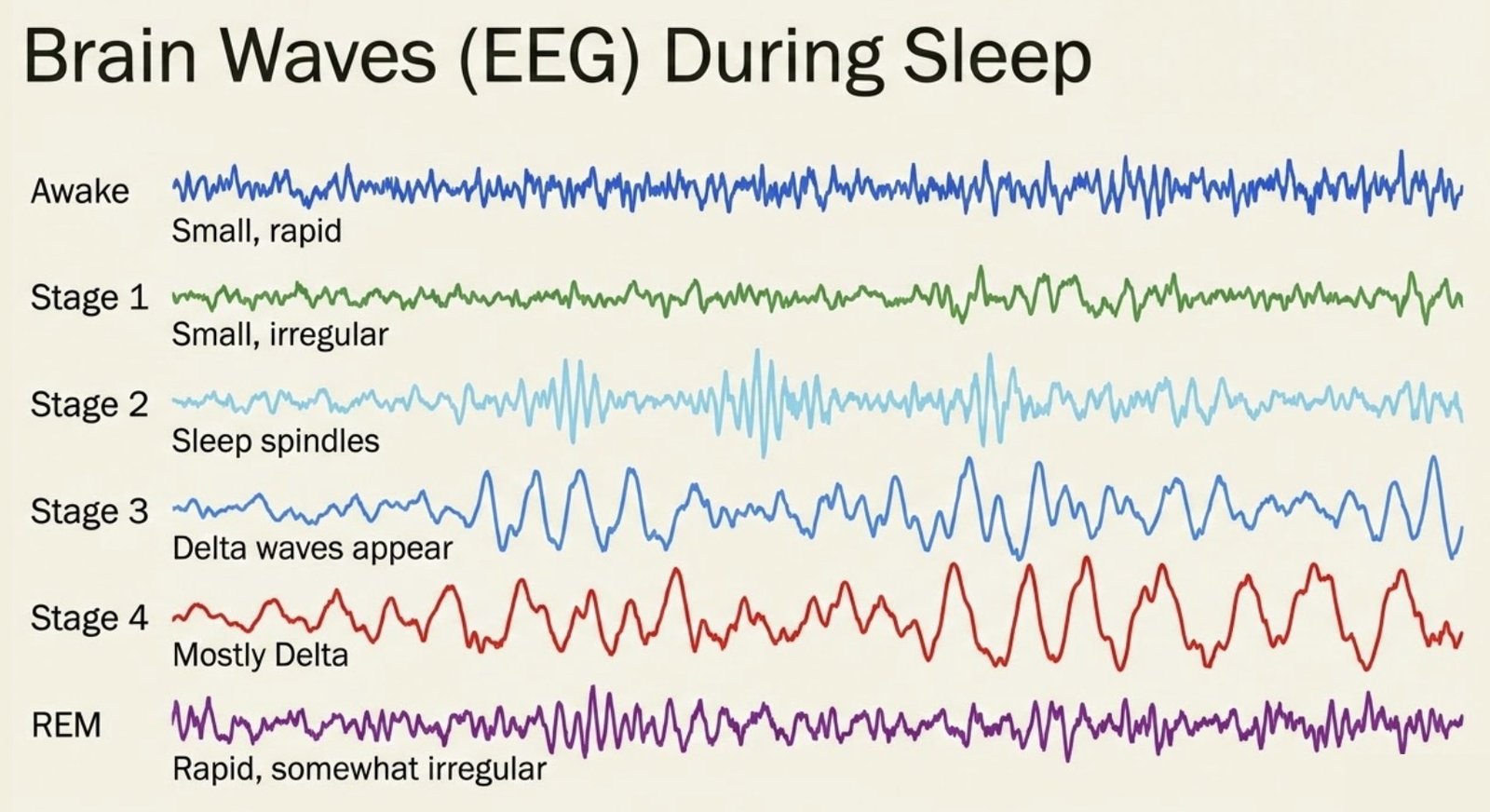
You cycle through the stages roughly every 90 minutes, four to six times a night. Here is how they fit together as a sequence.
| Stage | What it is | EEG signature |
|---|---|---|
| Awake | Alert, engaged. | Small, rapid beta waves; relaxed with eyes closed, slower alpha waves. |
| N1 (Stage 1) | The drift. Light sleep, easy to wake from; the stage of the "falling" sensation and hypnic jerks. A few minutes. | Small, irregular theta waves. |
| N2 (Stage 2) | The anchor. You spend more total time here than in any other stage. Body temperature drops, heart rate slows. | Sleep spindles (brief bursts) and K-complexes, thought to protect sleep from disruption. |
| N3 (old Stages 3 and 4) | Slow-wave sleep, the deep end. Hardest to wake from; blood pressure and breathing rate fall. Physically restorative; the stage of waste clearance and synaptic downscaling. Front-loaded into the first half of the night. | Big, slow delta waves — "delta waves appear" in Stage 3, "mostly delta" in Stage 4. |
| REM | The dreaming stage. Eyes move rapidly; vivid dreams; voluntary muscles are paralyzed (REM atonia) so you cannot act out dreams. Periods lengthen across the night. | Rapid, somewhat irregular, low-amplitude — looks almost like waking. |
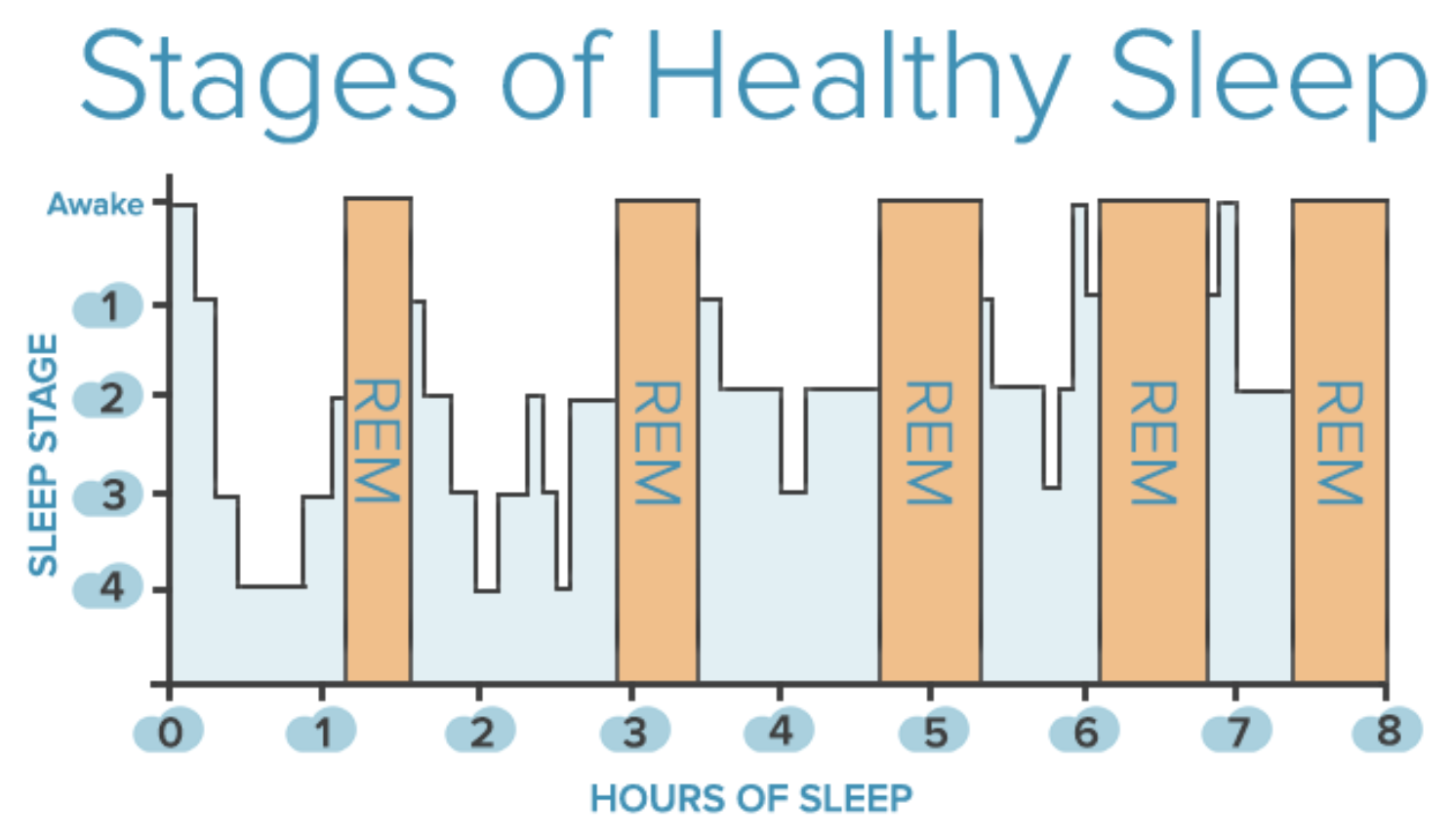
Two more facts about the architecture. The stages are not evenly distributed: N3 dominates the first two or three cycles and nearly vanishes by morning, while REM periods start at a few minutes and lengthen to 30 or 40 minutes in the final cycles. And the whole structure changes with age. Newborns sleep 16 hours with about half in REM; deep slow-wave sleep peaks in childhood and declines steeply through adolescence and adulthood, so that a 60-year-old gets a fraction of the N3 a 10-year-old does (Ohayon et al., 2004; Feinberg & Campbell, 2010).
Check yourself: which stage is hardest to wake someone from and most tied to physical restoration and waste clearance?
The early riser's penalty: sacrificing the REM-rich morning
Put the two previous sections together and a trap appears. Because REM is concentrated in the final cycles, cutting a night short does not remove sleep evenly. Someone who goes to bed at midnight and is woken by a 6 a.m. alarm has lost two hours of an eight-hour night — 25% of total sleep — but has lost a far larger share of REM, because the two REM-richest cycles are exactly the ones the alarm severed. The loss is disproportionate and targeted at the stage that supports cognitive and creative function, emotional regulation, and the integration of new learning (Walker, 2017; Rasch & Born, 2013). Cutting sleep short is not just losing time. It is losing the mind's essential morning upgrade.
The life cycle of sleep chronotypes
A chronotype is your body's preferred timing — lark or owl — and it is not fixed across life. Infants and young children are early chronotypes: up at dawn, asleep by 8 p.m., aligned with natural light. Puberty pushes the clock later. Melatonin release is delayed by roughly two hours relative to childhood, so a 16-year-old's body is not ready for sleep until around 11 p.m. or midnight and is not ready to wake until 8 or 9 a.m. (Carskadon, 2011; Hagenauer et al., 2009). Adulthood brings a modified early chronotype, adjusted for work and family demands and drifting earlier with age.
Roenneberg et al. (2004) measured chronotype in more than 25,000 people and found that the shift toward lateness peaks at about age 20 and then reverses — so sharply that they proposed the turning point as a biological marker for the end of adolescence. The important consequence: an adolescent forced onto an adult schedule, with a 6 a.m. alarm for a 7:30 school start, is not being lazy when the alarm feels like the middle of the night. Biologically, it is the middle of the night. The brain does not adjust earlier because the schedule demands it; the result is chronic sleep deprivation.
Adolescent sleep: the learning and pruning gap
Adolescence is a period of massive brain reorganization — synaptic pruning of unused connections and strengthening and myelination of the ones that are used — and much of that work happens during sleep. Feinberg and Campbell (2010) tracked the EEG of children across adolescence and found that slow-wave (delta) activity falls steeply through the teenage years, by well over a third, which they interpret as a direct index of cortical pruning. The teenage brain is learning more than it ever will again, so it needs more sleep, not less: the expert consensus is 8 to 10 hours a night (Hirshkowitz et al., 2015), with older research pointing to about 9¼ hours as optimal (Carskadon, 2011).
The gap between what the adolescent brain needs and what it gets is the "perfect storm" of Carskadon's (2011) title: a biological delay in the clock, a slower build-up of sleep pressure across the day, early school start times, evening screens, caffeine, and homework, all pushing in the same direction.
Effects of sleep on learning
Long-term potentiation
Learning has a cellular signature. Long-term potentiation (LTP) is the process by which a synapse that fires repeatedly becomes physically more efficient, so the next signal crosses more easily; it is the best-understood mechanism of memory formation. Animal research shows that LTP depends on sleep. Campbell et al. (2002) kept rats awake and then tested hippocampal slices: after one day of deprivation the slices showed a diminished capacity for LTP, and after two days the impairment was greater still. Vecsey et al. (2009) traced the mechanism to disrupted cAMP signaling in the hippocampus, a molecular pathway required for synaptic strengthening. A sleep-deprived brain can be exposed to information; it is much worse at building the physical change that constitutes learning it.
Sleep on it: the piano study
Walker et al. (2002) taught people a finger-tapping sequence on a keyboard — a five-key "piano" pattern — and tested them later. Participants trained in the morning and retested 12 hours later, awake, showed an initial practice effect but no further gain, and sometimes a decline. Participants trained in the evening who slept before retesting improved by about 20% in speed and made nearly 40% fewer errors, with no additional practice. The improvement was tied specifically to the amount of Stage 2 NREM sleep late in the night. Learned before bed and slept on, the skill did not decay; it kept improving from where they left off. Sleep is not a waste of time. It is when a good deal of the learning actually happens.
Restful states and cognitive performance: the Michigan study
It is not only sleep. Even being in a restful state helps. Berman et al. (2008) gave University of Michigan students demanding attention tasks until their performance fatigued, then sent them on a 50-minute walk — either through the Nichols Arboretum, peaceful and quiet, or through busy downtown Ann Arbor with its traffic and crowds — and tested them again. The arboretum walkers improved significantly on a working-memory test; the downtown walkers did not. A week later, with the conditions reversed, the result reversed with them. Natural environments let directed attention rest; busy urban ones make more demands on it. The key takeaway for a student: downtime, whether a full night's sleep, a nap, or simply a few quiet minutes in the day, is part of how learning turns into long-term memory, not a break from it.
The science of memory consolidation: SWS and REM
Put the stages to work. Consolidation is the process by which fragile new memories are stabilized and integrated into long-term storage, and the leading account is the active-systems model of Born and colleagues (Diekelmann & Born, 2010; Rasch & Born, 2013). During slow-wave sleep early in the night, the hippocampus replays the day's experiences in compressed form, and each replay nudges the memory trace toward the neocortex, where it is gradually woven into existing knowledge. At the same time, synaptic downscaling weeds out unnecessary connections so the remaining ones stand out (Tononi & Cirelli, 2014). Later in the night, REM sleep integrates and "glues": it links the new material to related older memories, extracts patterns, and takes the emotional charge off difficult experiences (Stickgold, 2005). The two stages are complementary, and a full night gives you both.
Critical takeaway for students
Sleep soon after a study session. Sleep does not just rest the body; it acts as the biological stabilizer that protects new memories from decay. Studying late and then sleeping four hours is not "getting the material in." It is entering the material and then skipping the step that saves it.
The benefits of later school start times
If adolescent biology delays the clock, the obvious policy lever is the school bell. The evidence is now substantial.
Minnesota. When Minneapolis moved high-school start times from 7:15 to 8:40 a.m., the first longitudinal study of the change — following more than 7,000 students — found students got nearly an hour more sleep on school nights, with improved attendance, less daytime sleepiness, and fewer reports of depressive symptoms (Wahlstrom, 2002). A later three-year study of more than 9,000 students across eight high schools in three states found a clean threshold: students who got at least eight hours on school nights reported significantly less depression, less substance use, less caffeine, and better grades than those below it, and later start times moved more students over the line (Wahlstrom et al., 2014).
Rhode Island. Owens et al. (2010) studied a single school that delayed its start by just 30 minutes, from 8:00 to 8:30. Students gained about 45 minutes of sleep a night, the share getting fewer than seven hours dropped by nearly 80%, and reports of depressed mood, fatigue, and falling asleep in class all fell. The faculty voted to keep the later time.
Kentucky. When Fayette County delayed start times by an hour, teen motor-vehicle crash rates in the county fell by about 16.5% over the following two years while rates for the rest of the state rose about 8% (Danner & Phillips, 2008).
Sleep as a tipping point. Analyses of the national Youth Risk Behavior Survey show that each additional hour of sleep is associated with lower odds of smoking, drinking, marijuana use, sexual activity, and feeling sad or hopeless — the well-rested student is less likely to report symptoms of depression, fall asleep in class, drink caffeinated beverages, keep a phone or computer in the bedroom, or do dangerous things without thinking (McKnight-Eily et al., 2011; Wahlstrom et al., 2014). The closer students get to eight hours, the greater the reduction in risky behavior. Prioritizing sleep through later start times produces healthier, higher-performing, and safer teenagers.
The high cost of sleep deprivation for teenagers
The neurological cost is the deepest one: deprivation inhibits the synaptic pruning and prioritizing of information that adolescent sleep exists to do. The behavioral and health costs cluster around it. Chronic short sleep in adolescents is associated with depression, obesity and poor diet, less physical activity and more screen time, high blood pressure and later cardiovascular disease, and delinquency (Owens et al., 2014).
The sleep interrupters. Researchers at the JFK Medical Center Sleep Disorders Center surveyed adolescents about nighttime use of phones and found that teenagers who texted after lights-out averaged dozens of messages a night; about one in five reported being woken by a text at least once a night, and later-night texting predicted daytime sleepiness and poorer school functioning. Girls were more likely to text after bedtime, boys more likely to game (Polos et al., 2015).
Sleep and crime. Criminologists have begun treating sleep as a risk factor in its own right. Later school start times are associated with less delinquency and substance use (Semenza et al., 2020), and in a national sample of adolescents, shorter sleep duration predicted a higher likelihood of being arrested (Partin & Lehmann, 2023). Sleep-deprived brains are worse at impulse control, emotional regulation, and weighing consequences, which is exactly the profile that turns a bad night into a bad decision. A lack of good sleep can have profound and lasting effects on teenagers' brain development, health, behavior, and social outcomes.
Tired teens turn to stimulants
Many tired teenagers do what tired adults do: they reach for a stimulant. Most turn to energy drinks; some to prescription stimulants like Ritalin or Adderall taken without a prescription. The caffeine content of energy drinks is largely unregulated — a single can may contain anywhere from about 80 to 500 milligrams, compared with the roughly 71-milligram cap on a 12-ounce soda — and surveys suggest 30 to 50% of adolescents and young adults consume them (Seifert et al., 2011). Caffeine overdoses in this age group have risen accordingly; the federal Drug Abuse Warning Network reported a roughly tenfold increase in energy-drink-related emergency-department visits between 2005 and 2011, and some teenagers report drinking as many as five cans a day. The cycle is self-defeating. Caffeine in the afternoon and evening masks sleep pressure, delays sleep onset, and degrades the deep sleep that would have fixed the tiredness — which guarantees a tired teenager tomorrow.
Blue light, melatonin, and the evening screen
Screens delay sleep by a specific mechanism. Phones, tablets, and laptops emit light enriched in the blue part of the spectrum, mimicking daylight. That light stimulates a specialized class of retinal cells — intrinsically photosensitive retinal ganglion cells (ipRGCs) containing the pigment melanopsin — which are not part of vision at all. They report ambient light directly to the SCN (Berson et al., 2002). Evening blue light tells the master clock that it is still daytime; the pineal gland's melatonin release is suppressed and delayed; sleep onset shifts later; and the circadian rhythm drifts. Ordinary room light in the hours before bed is enough to suppress melatonin onset and shorten its duration by about 90 minutes (Gooley et al., 2011), and reading on a light-emitting device before bed, compared with a printed book, delays melatonin by more than an hour, lengthens the time to fall asleep, reduces REM, and leaves people groggier the next morning (Chang et al., 2015).
One correction to a story you may hear: that our blue-light sensitivity is a leftover from aquatic ancestors, because blue light penetrates water best. The current understanding is that the melanopsin system is an ancient light-detecting pathway distinct from image-forming vision, tuned to the blue-rich signal of the daytime sky rather than to deep-sea vision. Either way, the practical conclusion is the same: the brain's clock is listening to your screen.
Same, but different: a snapshot of sleep from around the world
The biology is universal; the customs are not. In Japan, inemuri — "sleeping while present" — is napping in public, on the train or in a meeting, and it is read not as laziness but as a sign of diligence: you have worked yourself to exhaustion. The practice is more than a thousand years old and remains common in white-collar life (Steger, 2006). In Scandinavia, infants nap outdoors in prams, even in winter, on the belief that cold fresh air fortifies the immune system and produces longer, sounder sleep. Cross-national surveys such as the National Sleep Foundation's (2013) International Bedroom Poll find that a majority of Mexicans report praying or meditating before bed, that Chinese bedrooms often follow feng shui principles — mirrors are avoided because they are believed to bounce energy and heighten restlessness — and that Spain's famously late schedule owes something to a World War II–era political decision to shift the country's clocks to Berlin time, so the sun rises and sets an hour late relative to solar time. Some Spaniards now campaign to change it back.
Sleep by the numbers
All of the stuff you ever wanted to know about sleep, and a few things you never thought to ask — much of it popularized by Matthew Walker's Why We Sleep (2017). Here is the evidence behind the numbers.
You can't train yourself to sleep less. People adapt subjectively to chronic short sleep — they stop feeling as tired — while objective performance keeps declining, and the body never adapts to night-shift work either, because the circadian clock is programmed to make you alert by day and sleepy at night regardless of your schedule (Walker, 2017). The one exception is the tiny minority carrying a mutation in the DEC2 gene, who sleep about six hours and appear to be fine (He et al., 2009).
"I can't get out of bed in the morning." Persistent, overwhelming difficulty getting up has an informal name, dysania. It is not a recognized diagnosis, but it commonly accompanies depression and other conditions and is worth mentioning to a clinician if it is chronic.
Three kinds of sleep habit. Monophasic sleep happens in one segment per day — the modern norm. Biphasic sleep happens in two — the pre-industrial "first and second sleep," or a night plus a siesta. Polyphasic sleep happens in short bursts across the day, as in newborns and many other mammals. Humans, uniquely, are the only mammals that willingly delay going to sleep; one main reason Americans report being sleepy is self-imposed — who can go to bed when there are so many shows to binge?
How to sleep better
Practical advice, most of it drawn from Walker (2017) and consistent with the behavioral core of cognitive behavioral therapy for insomnia (Trauer et al., 2015). Each tip maps onto a mechanism described above.
| Tip | Why it works |
|---|---|
| Reduce the caffeine and nicotine. | Caffeine blocks adenosine receptors while adenosine keeps accumulating behind the dam; when it clears, the pressure crashes in all at once. Its half-life is 5–7 hours. Nicotine is a stimulant too and produces very light sleep. Watch hidden sources: a 5-Hour Energy shot (~215 mg), a can of Monster (~160 mg), a cup of coffee (80–100 mg), Excedrin (65 mg per tablet), Midol (60 mg), diet cola (~46 mg per 12 oz), kombucha (16–30 mg), dark chocolate (~25 mg per bar). |
| Load up on vitamin D — that is, sunlight. | Thirty minutes of natural light, ideally in the morning, entrains the SCN and advances the clock. Dim the lights before bed for the same reason in reverse (Gooley et al., 2011). |
| Check your devices at the door. | Think of the ideal bedroom as a prehistoric cave in the far north: cool, dark, gadget-free. Blue light delays melatonin (Chang et al., 2015); notifications fragment sleep (Polos et al., 2015); a visible clock makes you hyperaware of every passing minute. |
| Cut the late-night cardio. | Exercise raises core temperature and arousal. Finish heavy exercise two to three hours before bed so temperature can fall, which is a signal for sleep onset. |
| Leave time to unwind. | A relaxing pre-bed routine — reading, music, light stretching — lowers arousal. A "worry journal" offloads the loop of unfinished business that keeps the prefrontal cortex online. |
| Baths are best. | It sounds paradoxical, but a warm bath or shower an hour or two before bed dilates blood vessels in the skin, dumps heat, and lowers core temperature once you are in bed; a meta-analysis finds it speeds sleep onset and improves sleep quality (Haghayegh et al., 2019). |
| Eat light at night. | Heavy meals cause indigestion that fragments sleep; too many fluids mean a 3 a.m. bathroom trip. |
| Find a routine. | The clock likes regularity. Late one night and early the next is self-inflicted jet lag, and weekend "catch-up" does not work as well as it feels like it should (see "the myth of catching up," below). |
| Don't just lie there. | Lying awake teaches the brain that bed is a place for being awake and anxious. After about 25–30 minutes, get up and do something quiet until sleepy. This is stimulus control, one of the most effective components of CBT-I (Trauer et al., 2015). |
| Tamp down on the margaritas. | Alcohol is a sedative, not a sleep aid. It suppresses REM, fragments the second half of the night with brief awakenings you may not remember, and worsens breathing during sleep. |
| Reevaluate your pill regimen. | Some heart and lung medications and over-the-counter cold and allergy drugs disrupt sleep. Ask a pharmacist whether timing can move earlier in the day. |
The myth of catching up
After deprivation, sleep rebound kicks in: you fall asleep faster and spend more of the next night in deep sleep and REM. That is the clearest evidence that sleep is homeostatically regulated — the brain tracks the shortfall. But rebound does not repay the debt hour for hour, and the learning you failed to consolidate on the short nights is not recovered by a long Saturday (Diekelmann & Born, 2010). Sleep debt is real; the "catch-up" that fully clears it is largely a myth.
Sleeping with a partner: worse sleep, better nights
Most adults who share a bed have wondered, at 3 a.m. while a partner tosses, snores, or steals the blanket, whether they would sleep better alone. The honest answer from the research is: measured objectively, probably yes — and people choose to share anyway, for reasons that also turn out to be measurable.
Sleep is a dyadic behavior; for most adults it happens next to another person, and yet it was studied for decades as if it happened in isolation (Troxel, 2010). When researchers put couples in the lab and record both partners, the objective picture is one of mutual disruption. Bed partners move, and movement in one sleeper predicts movement and brief arousals in the other. In an actigraphy study of couples, Dittami et al. (2007) found that sleeping with a partner was associated with more movement and more disturbed sleep — and that the cost fell more heavily on women, whose sleep was more fragmented on shared nights, while men's was little changed. Snoring, mismatched chronotypes, and different bedtimes all add to the interference (Richter et al., 2016).
And yet. When the same couples are asked how they slept, they rate shared nights as better than solo nights, even when their bodies say otherwise (Troxel, 2010; Richter et al., 2016). And a more recent polysomnography study complicates the "objectively worse" story in an interesting way. Drews et al. (2020) recorded couples on nights together and apart and found that when they shared a bed, both partners got about 10% more REM sleep, with less fragmented REM, and their sleep stages synchronized — the two brains moving through the night's architecture in step, more so the better they rated their relationship. Co-sleeping seems to cost some lighter sleep to arousals while protecting the stage that does the most for emotional regulation and memory integration. The lead author's interpretation is that a trusted partner is a safety signal, and REM sleep — the stage in which the body is paralyzed and most vulnerable — is exactly the stage that a sense of security should permit.
A personal note from Prof. Magee
I choose to sleep next to my wife. It makes me feel better to be near her, even though her sleep is disrupted by my tossing and turning, and mine by hers. The research says we are both a little more awake for it — and that we are not being irrational. A quarter of married American couples have resolved the trade-off the other way and sleep in separate beds (National Sleep Foundation, 2013). Neither choice is wrong. Sleep is a relationship behavior as much as a biological one, and the "better" night is the one that serves both.
When REM leaks into waking: sleep paralysis
During REM sleep, the brainstem switches off the voluntary muscles — REM atonia — so you do not act out your dreams. Sleep paralysis is what happens when you wake up while the switch is still on: fully aware, eyes open or able to open, and unable to move or speak for seconds to a couple of minutes. Because the dream machinery is often still running, the episode frequently comes with hallucinations — a sensed presence in the room, a figure at the foot of the bed, pressure on the chest, difficulty breathing — and with intense fear (Cheyne et al., 1999). It is common: about 8% of the general population has had at least one episode, and the rate rises to roughly 28% among students and higher still among psychiatric patients (Sharpless & Barber, 2011). The strongest predictors are sleep deprivation, irregular sleep schedules, sleeping on your back, stress, and trauma exposure (Denis et al., 2018).
Every culture has named it: the incubus, the Old Hag of Newfoundland, kanashibari in Japan, "ghost oppression" in China, and, in the late twentieth century, alien abduction. The same neurology produces the same core experience — paralysis, presence, pressure — and the culture supplies the story (Cheyne et al., 1999). Frightening, common, benign, and self-limiting: it always ends on its own, and the best prevention is the sleep hygiene above.
When sleep goes wrong: sleep disorders
Everything above assumes the sleep machinery is working. Several distinct disorders break it, and they map neatly onto the systems described above.
Insomnia
Insomnia — persistent difficulty falling asleep or staying asleep despite adequate opportunity, with daytime consequences — is the most common sleep disorder, affecting roughly 10% of adults chronically. It often becomes self-perpetuating: a few bad nights produce anxiety about not sleeping, the anxiety produces arousal, arousal makes sleep harder, and the bed itself becomes a cue for wakefulness. The most effective long-term treatment is not a pill. Sleeping medications alter sleep architecture and lose effectiveness over time, whereas a short course of cognitive behavioral therapy for insomnia (CBT-I) — stimulus control, sleep restriction, relaxation, and correcting catastrophic beliefs about sleep — produces durable improvement, and a meta-analysis of randomized trials found that it reduces time to fall asleep and time awake during the night with effects that persist after treatment ends (Trauer et al., 2015). As the OASIS trial showed, treating insomnia also improves mental health more broadly (Freeman et al., 2017).
Sleep apnea
Sleep apnea is repeated pauses in breathing during sleep. In the common obstructive form, the airway physically collapses — usually with loud snoring — and each pause lightens sleep just enough to resume breathing, fragmenting the night dozens or hundreds of times without the sleeper's awareness; the result is exhaustion despite eight hours in bed, plus raised blood pressure and cardiovascular risk. In the rarer central form, the brainstem's breathing signal itself falters. Prevalence has risen with obesity; population estimates now put moderate-to-severe sleep-disordered breathing at roughly 10 to 17% of middle-aged men and 3 to 9% of women (Peppard et al., 2013). The standard treatment for the obstructive form is CPAP — continuous positive airway pressure — a mask that gently pushes air in all night to hold the airway open. It works well; the main obstacle is that many people will not wear it.
Narcolepsy
Narcolepsy is a neurological disorder in which the boundary between wakefulness and REM sleep breaks down. Its hallmarks are overwhelming daytime sleepiness with sudden sleep attacks, and, in many patients, cataplexy: a brief loss of muscle tone triggered by strong emotion, especially laughter — essentially REM atonia intruding into waking. Sleep paralysis and vivid hallucinations at sleep onset are common for the same reason. The biology is known: narcolepsy with cataplexy involves the loss of most of the hypothalamic neurons that produce hypocretin (orexin), a signal that stabilizes wakefulness and keeps REM in its place (Thannickal et al., 2000). Without it, the REM boundary is leaky in both directions.
Parasomnias: sleepwalking, night terrors, and REM sleep behavior disorder
Parasomnias are unwanted behaviors during sleep, and they divide by stage. The NREM parasomnias — sleepwalking (somnambulism), sleep talking, and night terrors — arise from deep slow-wave sleep, usually in the first third of the night, when part of the brain partially wakes while the rest stays deeply asleep. Sleepwalkers can perform complex behaviors — walking, eating, even driving — with eyes open and no memory afterward; night terrors produce screaming, thrashing, and a racing heart in a child who is not awake, cannot be consoled, and will not remember it. Both are common in children, tend to run in families, and are provoked by sleep deprivation and stress (Zadra et al., 2013).
The REM parasomnia is the mirror image of sleep paralysis. In REM sleep behavior disorder (RBD), the atonia that should paralyze you during dreams fails to switch on, so the sleeper physically acts out the dream — kicking, punching, shouting, sometimes injuring a bed partner — with no memory of it in the morning. Sleep paralysis is atonia lingering when it should have ended; RBD is atonia missing when it should be present. Same switch, opposite failure. RBD also matters clinically because it is one of the earliest warning signs neurologists have: in a long-term follow-up of older men diagnosed with RBD, 81% went on to develop Parkinson's disease or a related neurodegenerative disorder, often more than a decade later (Schenck et al., 2013).
Fatal familial insomnia
One disorder earns a mention for how terrifyingly it proves the point of this whole page. Fatal familial insomnia is an extremely rare inherited prion disease in which the thalamus — the relay that gates sensory input and helps generate sleep spindles and slow waves — progressively degenerates. Patients lose the ability to sleep, first partially and then almost entirely; they develop autonomic chaos (sweating, racing heart, high blood pressure), hallucinations, and dementia, and they die, typically within 12 to 18 months of onset. There is no treatment (Lugaresi et al., 1986). You cannot live without sleep, and this is the disease that shows it.
Check yourself: a sleeper punches and shouts during a vivid dream and remembers nothing in the morning. Which disorder, and what failed?
Watch: Sleepless in America
Sleepless in America (Hoffman, 2014). A documentary produced by National Geographic with the Public Good Projects and the National Institutes of Health. It is the best single hour on the science of sleep.
Film details on IMDb · Official trailer (National Geographic). Full episodes stream on Disney+ / Hulu (National Geographic library) and are available for purchase on the usual platforms.
Check yourself
The one thing to carry away
Sleep is the biological process that turns today's learning into tomorrow's knowledge, clears the brain's waste, regulates mood and appetite and immunity, and cannot be skipped, trained away, or fully repaid later. The adolescent version of that process needs more time than any school schedule gives it, and the modern environment — electric light, screens, caffeine, early bells — pushes against it at every step. Everything else is detail. If you remember one number, remember eight hours; if you remember one rule, sleep after you study.
References
Basner, M., Fomberstein, K. M., Razavi, F. M., Banks, S., William, J. H., Rosa, R. R., & Dinges, D. F. (2007). American Time Use Survey: Sleep time and its relationship to waking activities. Sleep, 30(9), 1085–1095. https://doi.org/10.1093/sleep/30.9.1085
Berman, M. G., Jonides, J., & Kaplan, S. (2008). The cognitive benefits of interacting with nature. Psychological Science, 19(12), 1207–1212. https://doi.org/10.1111/j.1467-9280.2008.02225.x
Berson, D. M., Dunn, F. A., & Takao, M. (2002). Phototransduction by retinal ganglion cells that set the circadian clock. Science, 295(5557), 1070–1073. https://doi.org/10.1126/science.1067262
Borbély, A. A., Daan, S., Wirz-Justice, A., & Deboer, T. (2016). The two-process model of sleep regulation: A reappraisal. Journal of Sleep Research, 25(2), 131–143. https://doi.org/10.1111/jsr.12371
Campbell, I. G., Guinan, M. J., & Horowitz, J. M. (2002). Sleep deprivation impairs long-term potentiation in rat hippocampal slices. Journal of Neurophysiology, 88(2), 1073–1076. https://doi.org/10.1152/jn.2002.88.2.1073
Cappuccio, F. P., D'Elia, L., Strazzullo, P., & Miller, M. A. (2010). Sleep duration and all-cause mortality: A systematic review and meta-analysis of prospective studies. Sleep, 33(5), 585–592. https://doi.org/10.1093/sleep/33.5.585
Carskadon, M. A. (2011). Sleep in adolescents: The perfect storm. Pediatric Clinics of North America, 58(3), 637–647. https://doi.org/10.1016/j.pcl.2011.03.003
Chang, A.-M., Aeschbach, D., Duffy, J. F., & Czeisler, C. A. (2015). Evening use of light-emitting eReaders negatively affects sleep, circadian timing, and next-morning alertness. Proceedings of the National Academy of Sciences, 112(4), 1232–1237. https://doi.org/10.1073/pnas.1418490112
Cheyne, J. A., Rueffer, S. D., & Newby-Clark, I. R. (1999). Hypnagogic and hypnopompic hallucinations during sleep paralysis: Neurological and cultural construction of the night-mare. Consciousness and Cognition, 8(3), 319–337. https://doi.org/10.1006/ccog.1999.0404
Czeisler, C. A., Duffy, J. F., Shanahan, T. L., Brown, E. N., Mitchell, J. F., Rimmer, D. W., Ronda, J. M., Silva, E. J., Allan, J. S., Emens, J. S., Dijk, D.-J., & Kronauer, R. E. (1999). Stability, precision, and near-24-hour period of the human circadian pacemaker. Science, 284(5423), 2177–2181. https://doi.org/10.1126/science.284.5423.2177
Danner, F., & Phillips, B. (2008). Adolescent sleep, school start times, and teen motor vehicle crashes. Journal of Clinical Sleep Medicine, 4(6), 533–535. https://doi.org/10.5664/jcsm.27345
Denis, D., French, C. C., & Gregory, A. M. (2018). A systematic review of variables associated with sleep paralysis. Sleep Medicine Reviews, 38, 141–157. https://doi.org/10.1016/j.smrv.2017.05.005
Diekelmann, S., & Born, J. (2010). The memory function of sleep. Nature Reviews Neuroscience, 11(2), 114–126. https://doi.org/10.1038/nrn2762
Dittami, J., Keckeis, M., Machatschke, I., Katina, S., Zeitlhofer, J., & Kloesch, G. (2007). Sex differences in the reactions to sleeping in pairs versus sleeping alone in humans. Sleep and Biological Rhythms, 5(4), 271–276. https://doi.org/10.1111/j.1479-8425.2007.00320.x
Drews, H. J., Wallot, S., Brysch, P., Berger-Johannsen, H., Weinhold, S. L., Mitkidis, P., Baier, P. C., Lechinger, J., Roepstorff, A., & Göder, R. (2020). Bed-sharing in couples is associated with increased and stabilized REM sleep and sleep-stage synchronization. Frontiers in Psychiatry, 11, Article 583. https://doi.org/10.3389/fpsyt.2020.00583
Ekirch, A. R. (2001). Sleep we have lost: Pre-industrial slumber in the British Isles. The American Historical Review, 106(2), 343–386. https://doi.org/10.1086/ahr/106.2.343
Feinberg, I., & Campbell, I. G. (2010). Sleep EEG changes during adolescence: An index of a fundamental brain reorganization. Brain and Cognition, 72(1), 56–65. https://doi.org/10.1016/j.bandc.2009.09.008
Freeman, D., Sheaves, B., Goodwin, G. M., Yu, L.-M., Nickless, A., Harrison, P. J., Emsley, R., Luik, A. I., Foster, R. G., Wadekar, V., Hinds, C., Gumley, A., Jones, R., Lightman, S., Jones, S., Bentall, R., Kinderman, P., Rowse, G., Brugha, T., … Espie, C. A. (2017). The effects of improving sleep on mental health (OASIS): A randomised controlled trial with mediation analysis. The Lancet Psychiatry, 4(10), 749–758. https://doi.org/10.1016/S2215-0366(17)30328-0
Gooley, J. J., Chamberlain, K., Smith, K. A., Khalsa, S. B. S., Rajaratnam, S. M. W., Van Reen, E., Zeitzer, J. M., Czeisler, C. A., & Lockley, S. W. (2011). Exposure to room light before bedtime suppresses melatonin onset and shortens melatonin duration in humans. The Journal of Clinical Endocrinology & Metabolism, 96(3), E463–E472. https://doi.org/10.1210/jc.2010-2098
Gulevich, G., Dement, W., & Johnson, L. (1966). Psychiatric and EEG observations on a case of prolonged (264 hours) wakefulness. Archives of General Psychiatry, 15(1), 29–35. https://doi.org/10.1001/archpsyc.1966.01730130031005
Hafner, M., Stepanek, M., Taylor, J., Troxel, W. M., & van Stolk, C. (2016). Why sleep matters — the economic costs of insufficient sleep: A cross-country comparative analysis. RAND Corporation. https://doi.org/10.7249/RR1791
Haghayegh, S., Khoshnevis, S., Smolensky, M. H., Diller, K. R., & Castriotta, R. J. (2019). Before-bedtime passive body heating by warm shower or bath to improve sleep: A systematic review and meta-analysis. Sleep Medicine Reviews, 46, 124–135. https://doi.org/10.1016/j.smrv.2019.04.008
Hagenauer, M. H., Perryman, J. I., Lee, T. M., & Carskadon, M. A. (2009). Adolescent changes in the homeostatic and circadian regulation of sleep. Developmental Neuroscience, 31(4), 276–284. https://doi.org/10.1159/000216538
He, Y., Jones, C. R., Fujiki, N., Xu, Y., Guo, B., Holder, J. L., Rossner, M. J., Nishino, S., & Fu, Y.-H. (2009). The transcriptional repressor DEC2 regulates sleep length in mammals. Science, 325(5942), 866–870. https://doi.org/10.1126/science.1174443
Hirshkowitz, M., Whiton, K., Albert, S. M., Alessi, C., Bruni, O., DonCarlos, L., Hazen, N., Herman, J., Katz, E. S., Kheirandish-Gozal, L., Neubauer, D. N., O'Donnell, A. E., Ohayon, M., Peever, J., Rawding, R., Sachdeva, R. C., Setters, B., Vitiello, M. V., Ware, J. C., & Adams Hillard, P. J. (2015). National Sleep Foundation's sleep time duration recommendations: Methodology and results summary. Sleep Health, 1(1), 40–43. https://doi.org/10.1016/j.sleh.2014.12.010
Hoffman, J. (Director). (2014). Sleepless in America [Film]. National Geographic Channel; The Public Good Projects; National Institutes of Health. https://www.imdb.com/title/tt4244650/
Irwin, M. R. (2015). Why sleep is important for health: A psychoneuroimmunology perspective. Annual Review of Psychology, 66, 143–172. https://doi.org/10.1146/annurev-psych-010213-115205
Lugaresi, E., Medori, R., Montagna, P., Baruzzi, A., Cortelli, P., Lugaresi, A., Tinuper, P., Zucconi, M., & Gambetti, P. (1986). Fatal familial insomnia and dysautonomia with selective degeneration of thalamic nuclei. New England Journal of Medicine, 315(16), 997–1003. https://doi.org/10.1056/NEJM198610163151605
McKnight-Eily, L. R., Eaton, D. K., Lowry, R., Croft, J. B., Presley-Cantrell, L., & Perry, G. S. (2011). Relationships between hours of sleep and health-risk behaviors in US adolescent students. Preventive Medicine, 53(4–5), 271–273. https://doi.org/10.1016/j.ypmed.2011.06.020
Naska, A., Oikonomou, E., Trichopoulou, A., Psaltopoulou, T., & Trichopoulos, D. (2007). Siesta in healthy adults and coronary mortality in the general population. Archives of Internal Medicine, 167(3), 296–301. https://doi.org/10.1001/archinte.167.3.296
Nath, R. D., Bedbrook, C. N., Abrams, M. J., Basinger, T., Bois, J. S., Prober, D. A., Sternberg, P. W., Gradinaru, V., & Goentoro, L. (2017). The jellyfish Cassiopea exhibits a sleep-like state. Current Biology, 27(19), 2984–2990. https://doi.org/10.1016/j.cub.2017.08.014
National Sleep Foundation. (2013). 2013 international bedroom poll: Summary of findings. National Sleep Foundation.
Nunn, C. L., & Samson, D. R. (2018). Sleep in a comparative context: Investigating how human sleep differs from sleep in other primates. American Journal of Physical Anthropology, 166(3), 601–612. https://doi.org/10.1002/ajpa.23427
Ohayon, M. M., Carskadon, M. A., Guilleminault, C., & Vitiello, M. V. (2004). Meta-analysis of quantitative sleep parameters from childhood to old age in healthy individuals: Developing normative sleep values across the human lifespan. Sleep, 27(7), 1255–1273. https://doi.org/10.1093/sleep/27.7.1255
Owens, J. A., Belon, K., & Moss, P. (2010). Impact of delaying school start time on adolescent sleep, mood, and behavior. Archives of Pediatrics & Adolescent Medicine, 164(7), 608–614. https://doi.org/10.1001/archpediatrics.2010.96
Owens, J., Adolescent Sleep Working Group, & Committee on Adolescence. (2014). Insufficient sleep in adolescents and young adults: An update on causes and consequences. Pediatrics, 134(3), e921–e932. https://doi.org/10.1542/peds.2014-1696
Partin, R. D., & Lehmann, P. S. (2023). The association between sleep duration and arrest among adolescents. Crime & Delinquency, 69(6–7), 1131–1160. https://doi.org/10.1177/00111287211047532
Peppard, P. E., Young, T., Barnet, J. H., Palta, M., Hagen, E. W., & Hla, K. M. (2013). Increased prevalence of sleep-disordered breathing in adults. American Journal of Epidemiology, 177(9), 1006–1014. https://doi.org/10.1093/aje/kws342
Polos, P. G., Bhat, S., Gupta, D., O'Malley, R. J., DeBari, V. A., Upadhyay, H., Chaudhry, S., Nimma, A., Pinto-Zipp, G., & Chokroverty, S. (2015). The impact of Sleep Time-Related Information and Communication Technology (STRICT) on sleep patterns and daytime functioning in American adolescents. Journal of Adolescence, 44, 232–244. https://doi.org/10.1016/j.adolescence.2015.08.002
Prather, A. A., Janicki-Deverts, D., Hall, M. H., & Cohen, S. (2015). Behaviorally assessed sleep and susceptibility to the common cold. Sleep, 38(9), 1353–1359. https://doi.org/10.5665/sleep.4968
Rasch, B., & Born, J. (2013). About sleep's role in memory. Physiological Reviews, 93(2), 681–766. https://doi.org/10.1152/physrev.00032.2012
Rechtschaffen, A., Gilliland, M. A., Bergmann, B. M., & Winter, J. B. (1983). Physiological correlates of prolonged sleep deprivation in rats. Science, 221(4606), 182–184. https://doi.org/10.1126/science.6857280
Richter, K., Adam, S., Geiss, L., Peter, L., & Niklewski, G. (2016). Two in a bed: The influence of couple sleeping and chronotypes on relationship and sleep. An overview. Chronobiology International, 33(10), 1464–1472. https://doi.org/10.1080/07420528.2016.1220388
Roenneberg, T., Kuehnle, T., Pramstaller, P. P., Ricken, J., Havel, M., Guth, A., & Merrow, M. (2004). A marker for the end of adolescence. Current Biology, 14(24), R1038–R1039. https://doi.org/10.1016/j.cub.2004.11.039
Sandhu, A., Seth, M., & Gurm, H. S. (2014). Daylight savings time and myocardial infarction. Open Heart, 1(1), Article e000019. https://doi.org/10.1136/openhrt-2013-000019
Schenck, C. H., Boeve, B. F., & Mahowald, M. W. (2013). Delayed emergence of a parkinsonian disorder or dementia in 81% of older men initially diagnosed with idiopathic rapid eye movement sleep behavior disorder: A 16-year update on a previously reported series. Sleep Medicine, 14(8), 744–748. https://doi.org/10.1016/j.sleep.2012.10.009
Seifert, S. M., Schaechter, J. L., Hershorin, E. R., & Lipshultz, S. E. (2011). Health effects of energy drinks on children, adolescents, and young adults. Pediatrics, 127(3), 511–528. https://doi.org/10.1542/peds.2009-3592
Semenza, D. C., Meldrum, R. C., Jackson, D. B., Vaughn, M. G., & Piquero, A. R. (2020). School start times, delinquency, and substance use: A criminological perspective. Crime & Delinquency, 66(2), 163–193. https://doi.org/10.1177/0011128719845147
Sharpless, B. A., & Barber, J. P. (2011). Lifetime prevalence rates of sleep paralysis: A systematic review. Sleep Medicine Reviews, 15(5), 311–315. https://doi.org/10.1016/j.smrv.2011.01.007
Shokri-Kojori, E., Wang, G.-J., Wiers, C. E., Demiral, S. B., Guo, M., Kim, S. W., Lindgren, E., Ramirez, V., Zehra, A., Freeman, C., Miller, G., Manza, P., Srivastava, T., De Santi, S., Tomasi, D., Benveniste, H., & Volkow, N. D. (2018). β-Amyloid accumulation in the human brain after one night of sleep deprivation. Proceedings of the National Academy of Sciences, 115(17), 4483–4488. https://doi.org/10.1073/pnas.1721694115
Spaeth, A. M., Dinges, D. F., & Goel, N. (2013). Effects of experimental sleep restriction on weight gain, caloric intake, and meal timing in healthy adults. Sleep, 36(7), 981–990. https://doi.org/10.5665/sleep.2792
Steger, B. (2006). Sleeping through class to success: Japanese notions of time and diligence. Time & Society, 15(2–3), 197–214. https://doi.org/10.1177/0961463X06066952
Stickgold, R. (2005). Sleep-dependent memory consolidation. Nature, 437(7063), 1272–1278. https://doi.org/10.1038/nature04286
Tefft, B. C. (2012). Prevalence of motor vehicle crashes involving drowsy drivers, United States, 1999–2008. Accident Analysis & Prevention, 45, 180–186. https://doi.org/10.1016/j.aap.2011.05.028
Thannickal, T. C., Moore, R. Y., Nienhuis, R., Ramanathan, L., Gulyani, S., Aldrich, M., Cornford, M., & Siegel, J. M. (2000). Reduced number of hypocretin neurons in human narcolepsy. Neuron, 27(3), 469–474. https://doi.org/10.1016/S0896-6273(00)00058-1
Tononi, G., & Cirelli, C. (2014). Sleep and the price of plasticity: From synaptic and cellular homeostasis to memory consolidation and integration. Neuron, 81(1), 12–34. https://doi.org/10.1016/j.neuron.2013.12.025
Trauer, J. M., Qian, M. Y., Doyle, J. S., Rajaratnam, S. M. W., & Cunnington, D. (2015). Cognitive behavioral therapy for chronic insomnia: A systematic review and meta-analysis. Annals of Internal Medicine, 163(3), 191–204. https://doi.org/10.7326/M14-2841
Troxel, W. M. (2010). It's more than sex: Exploring the dyadic nature of sleep and implications for health. Psychosomatic Medicine, 72(6), 578–586. https://doi.org/10.1097/PSY.0b013e3181de7ff8
Vecsey, C. G., Baillie, G. S., Jaganath, D., Havekes, R., Daniels, A., Wimmer, M., Huang, T., Brown, K. M., Li, X.-Y., Descalzi, G., Kim, S. S., Chen, T., Shang, Y.-Z., Zhuo, M., Houslay, M. D., & Abel, T. (2009). Sleep deprivation impairs cAMP signalling in the hippocampus. Nature, 461(7267), 1122–1125. https://doi.org/10.1038/nature08488
Wahlstrom, K. (2002). Changing times: Findings from the first longitudinal study of later high school start times. NASSP Bulletin, 86(633), 3–21. https://doi.org/10.1177/019263650208663302
Wahlstrom, K., Dretzke, B., Gordon, M., Peterson, K., Edwards, K., & Gdula, J. (2014). Examining the impact of later high school start times on the health and academic performance of high school students: A multi-site study. Center for Applied Research and Educational Improvement, University of Minnesota. https://conservancy.umn.edu/handle/11299/162769
Walker, M. (2017). Why we sleep: Unlocking the power of sleep and dreams. Scribner.
Walker, M. P., Brakefield, T., Morgan, A., Hobson, J. A., & Stickgold, R. (2002). Practice with sleep makes perfect: Sleep-dependent motor skill learning. Neuron, 35(1), 205–211. https://doi.org/10.1016/S0896-6273(02)00746-8
Wheaton, A. G., Jones, S. E., Cooper, A. C., & Croft, J. B. (2018). Short sleep duration among middle school and high school students — United States, 2015. MMWR. Morbidity and Mortality Weekly Report, 67(3), 85–90. https://doi.org/10.15585/mmwr.mm6703a1
Williamson, A. M., & Feyer, A.-M. (2000). Moderate sleep deprivation produces impairments in cognitive and motor performance equivalent to legally prescribed levels of alcohol intoxication. Occupational and Environmental Medicine, 57(10), 649–655. https://doi.org/10.1136/oem.57.10.649
Xie, L., Kang, H., Xu, Q., Chen, M. J., Liao, Y., Thiyagarajan, M., O'Donnell, J., Christensen, D. J., Nicholson, C., Iliff, J. J., Takano, T., Deane, R., & Nedergaard, M. (2013). Sleep drives metabolite clearance from the adult brain. Science, 342(6156), 373–377. https://doi.org/10.1126/science.1241224
Zadra, A., Desautels, A., Petit, D., & Montplaisir, J. (2013). Somnambulism: Clinical aspects and pathophysiological hypotheses. The Lancet Neurology, 12(3), 285–294. https://doi.org/10.1016/S1474-4422(12)70322-8